Why Climate Startups Struggle to Scale in South Asia: Key Challenges and What Needs to Change

Sumita Singh
May 15, 2026
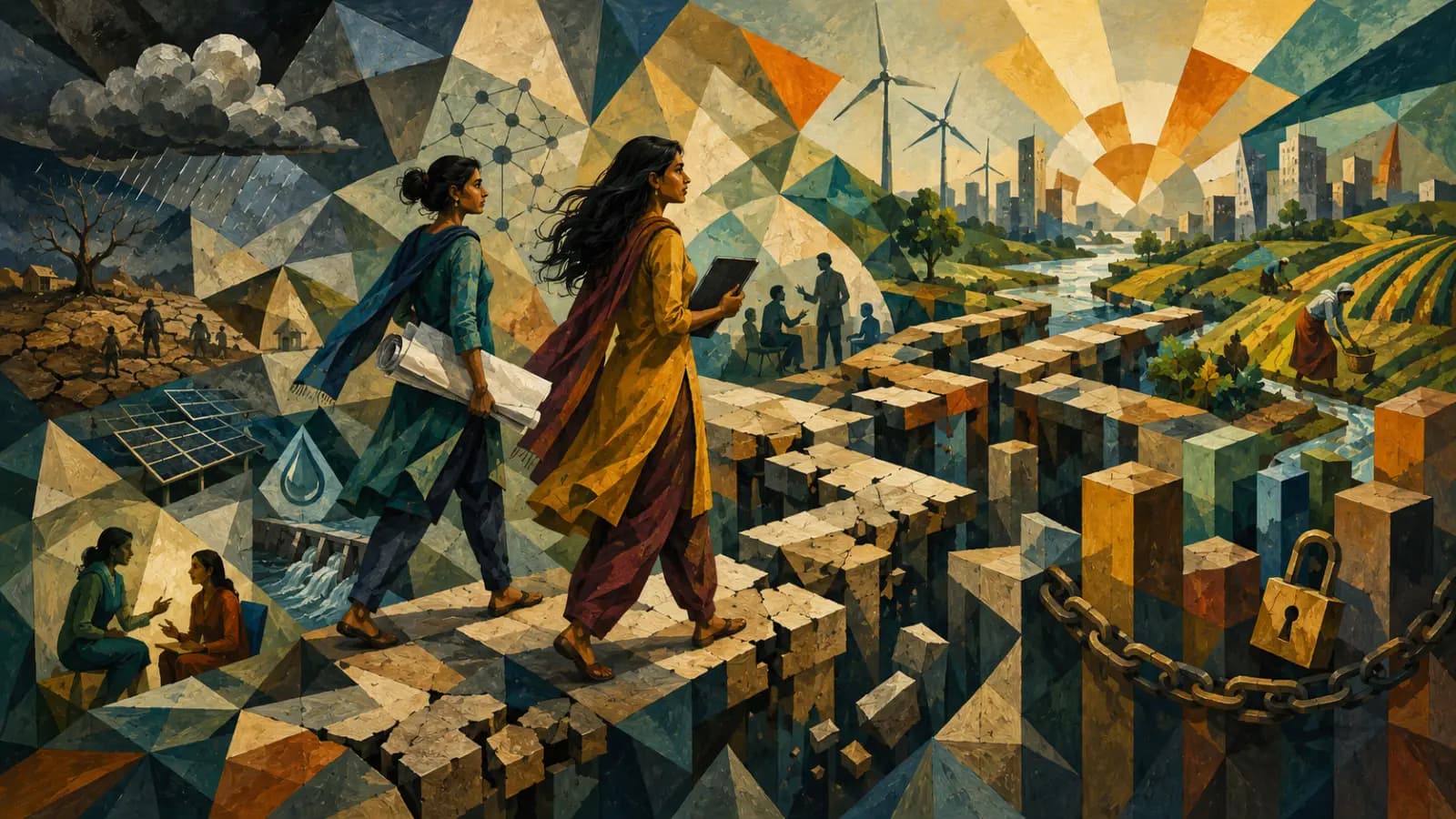
Spend a little time in the climate startup ecosystem in South Asia, and a pattern begins to emerge.
There is no shortage of ideas. No shortage of urgency. And certainly, no shortage of climate founders who care deeply about the problems they are trying to solve.
And yet, very few climate startups actually scale.
This is not for lack of effort, or even lack of innovation. As explored earlier in “The Climate Finance Gap in South Asia – and the Case for Women-Led Innovation”, the region is already rich with bold, context-driven solutions. Founders here are building for some of the most complex climate challenges in the world, often under constraints that would stall progress elsewhere.
The real issues lie not in the beginning, but in what comes next.
Because in South Asia, the journey from idea to impact is rarely linear, and almost never easy.
Why Climate Startups Get Stuck After the Pilot Stage
For many founders, the early journey looks promising.
A compelling idea takes shape. A prototype is built. A pilot is launched, often successfully. There is validation, there is interest, and there are early signals of impact.
But then, momentum slows. The transition from pilot to scale is where many climate startups struggle. It is also where the ecosystem, more often than not, begins to thin out.
This is the stage between ideation and investment – a space that is rarely structured, and even more rarely supported with intent. It is here that startups must move from proving that something can work, to demonstrating that it can scale.
That shift is far more demanding than it appears.
The Real Challenge Isn’t Funding, It’s Accessing the Right Capital
It is easy to attribute this challenge to a lack of capital. And while climate funding gaps are real, they tell only part of the story. This gap is well documented. South Asia requires over $1 trillion in climate investment by 2030, yet current flows remain a fraction of that need.
In reality, early-stage capital does exist. Grants, fellowships, and catalytic capital often enable founders to test ideas and run pilots.
Scaling, however, requires a different kind of capital – capital that is patient, aligned with climate timelines, and comfortable with uncertainty. It requires investors who understand that returns may take longer, but the impact can be far more significant.
Just as importantly, it requires startups to be ready for that capital.
And this is where the disconnect becomes most visible. Many startups are building strong solutions but are not yet positioned to engage effectively with investors. The gap, therefore, is not just financial, it is structural.
As impact investing leaders and ecosystem builders increasingly point out, the challenge is often not the absence of capital, but the shortage of investment-ready enterprises and effective pathways connecting capital to scalable climate solutions.
From Technical Expert to Business Builder: The Founder Gap
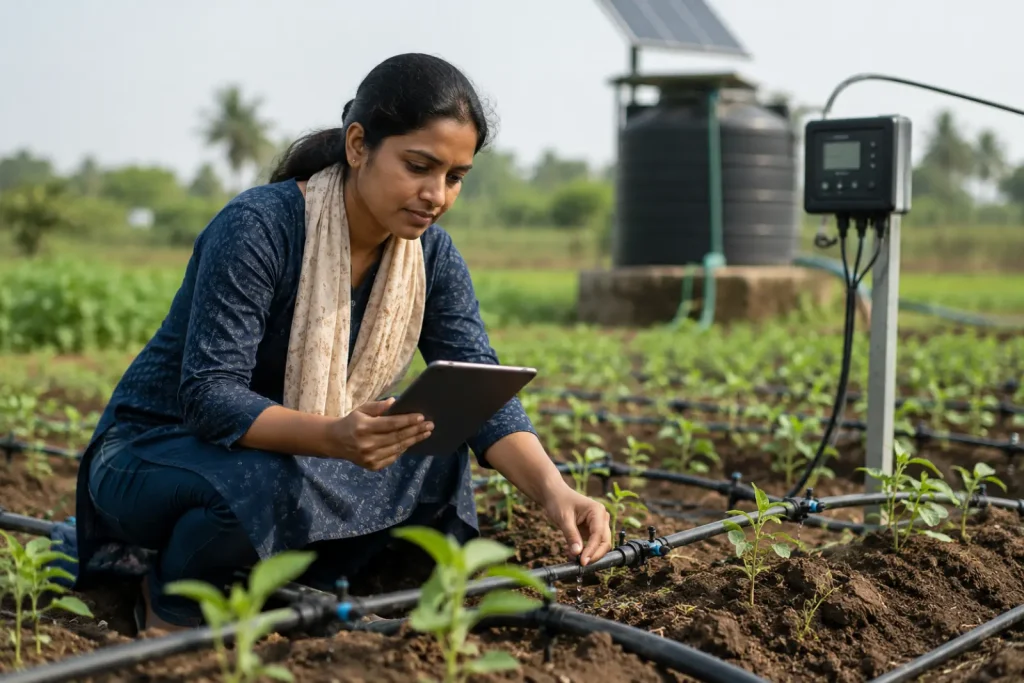
A significant number of climate founders come from deeply technical or domain-driven backgrounds. They are engineers, researchers, or practitioners who understand the problem intimately.
What they are often not prepared for is the shift required to scale.
Building a startup is not just about solving a problem; it is about building a business around that solution. It requires clarity of revenue, articulation of value, and the ability to communicate that value effectively to investors, partners, and markets.
This transition – from problem-solver to business builder – is one of the most critical inflection points in a founder’s journey.
Without the right support, even the most promising solutions can struggle to move forward – not because they lack merit, but because they lack the structure needed to grow.
The Overlooked Gap Between Early Support and Real Scale
Step back, and a pattern emerges across the climate innovation ecosystem.
On one end, there is growing support for early-stage innovation – incubators, accelerators, and challenges that help founders get started. On the other, there is increasing interest from investors seeking scalable, investment-ready ventures.
But between these two ends lies a critical gap.
This “missing middle” is not unique to climate alone but is particularly pronounced in the sector. Research from the International Finance Corporation (IFC) has consistently highlighted the shortage of early-growth capital for startups in emerging markets, especially those operating in capital-intensive and impact-driven sectors like climate.
This is the phase where startups must refine their business models, validate their markets more rigorously, and prepare themselves for serious capital. It is also the phase that remains underdeveloped across much of South Asia.
As outlined in “Project SAFFAL: Building a Pipeline of Investment-Ready Climate Startups”, bridging this gap requires more than fragmented interventions. It requires a deliberate focus on building investment readiness – not as an afterthought, but as a core outcome. Because without this bridge, many startups never make it to the point where capital can find them.
The Hidden Barriers Facing Women-Led Climate Startups
Even as climate entrepreneurship grows across South Asia, women-led climate enterprises continue to navigate an uneven playing field. The barriers are not always visible, but they are persistent.
Access to capital remains one of the most significant challenges. Globally, less than 3% of venture capital funding goes to women-led startups, a gap that is often even wider in emerging markets and climate-focused sectors. Women founders often face greater scrutiny, smaller cheque sizes, and more limited access to investor networks, particularly in sectors like climate and deep tech, which are already perceived as high-risk.
Beyond funding, there are gaps in visibility and access. Informal networks – where many opportunities, partnerships, and introductions originate – are often less accessible to women founders. Over time, this compounds into fewer opportunities and slower scaling trajectories.
These challenges are further intensified by the broader realities of the climate sector. Long payback periods, complex regulatory environments, and fragmented markets demand sustained support and resilience – resources that are harder to access without strong networks and institutional backing.
And yet, despite these constraints, women-led climate enterprises continue to demonstrate strong potential – not only in building viable businesses, but in driving more inclusive and community-centred climate solutions.
Addressing these barriers is not just a question of equity. It is central to unlocking the full potential of climate innovation in the region.
Why Ecosystem Support Matters More Than Ever for Scaling Startups
If climate startups in South Asia are to scale meaningfully, the way we support them must evolve.
The focus must move beyond early-stage validation towards preparing startups for growth. This means building pathways that help founders translate strong ideas into investable, scalable businesses.
It also requires a shift in how capital is deployed. Climate solutions do not follow conventional growth curves, and funding models must reflect that reality. More flexible, patient, and blended approaches will be essential.
Equally important is the role of mentorship and ecosystem support. As explored in “From Idea to Investment-Ready: How Project SAFFAL is Building the Next Generation of Climate”, sustained, hands-on guidance can play a defining role in helping founders navigate complexity and move from concept to scale.
Ultimately, startups do not scale in isolation. They scale within ecosystems, and the strength of those ecosystems often determines their success.
Rethinking Capital for Climate Startups in South Asia
This is where initiatives like Project SAFFAL begin to take on greater significance.
Rather than focusing only on ideas or only on capital, Project SAFFAL’s approach is to work within that missing middle – supporting founders through the less visible, but most critical stages of their journey. Addressing this gap requires more than isolated funding interventions. It requires ecosystems that combine mentorship, investor readiness, strategic guidance, and long-term relationship building alongside access to capital.
This is the space Project SAFFAL is designed to operate in: strengthening not only the availability of capital, but the conditions that allow climate startups to become investable, scalable, and resilient over the long term.
Because ultimately, scaling climate innovation is not just about funding ideas. It is about building the systems that help those ideas grow into lasting solutions.
What It Takes to Turn Climate Ideas into Scalable Businesses
South Asia stands at a unique intersection. It faces some of the most pressing climate challenges in the world, but it is also home to a new generation of founders working to solve them.
The opportunity is not just to support these founders at the beginning, but to stay with them through the journey – especially at the moments where progress begins to stall.
Because the difference between a good idea and a scaled solution is rarely just effort. More often, it is the presence – or absence – of the right support, at the right time.
And building that support, consistently and intentionally, may be one of the most important climate solutions of all.
Join SAFFAL
The Climate Finance Catalyst for South Asia
Apply as an Impact Philanthropist, Donor, Startup, SME, Climate Expert, or Institution. Mobilize climate capital into the right sectors.