Insights from Project SAFFAL: What We’re Learning from Supporting Climate Startups in South Asia

Sumita Singh
May 16, 2026

Learning in Motion
There is a certain kind of clarity that only emerges in the middle of doing – actually doing things.
Project SAFFAL is still underway. With more than 20 mentor sessions completed for a cohort of 160+ women-led climate enterprises across South Asia, the journey is far from over. And yet, patterns are beginning to emerge across conversations with founders, mentors, investors, and ecosystem partners working at the intersection of climate innovation and finance.
These are not conclusions drawn from hindsight. Most of these observations are still unfolding in real time, shaped by the realities of supporting climate startups in one of the world’s most climate-vulnerable and economically complex regions.
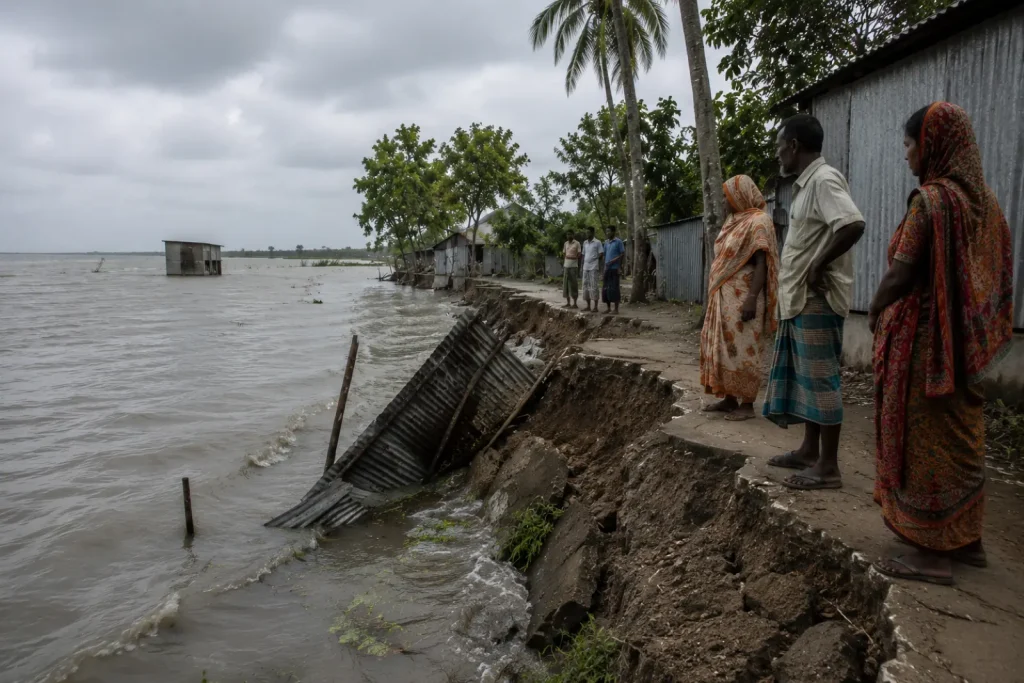
According to the World Bank, South Asia is expected to be among the world’s most heavily impacted regions, with rising heat stress, water insecurity, flooding, and livelihood disruption affecting hundreds of millions of people over the coming decades.
And if there is one thing that is already evident, it is this: the challenge in South Asia is not a lack of innovation. The founders in the SAFFAL cohort are already building highly relevant solutions. The real challenge lies in transforming those solutions into scalable, investable, and resilient businesses within ecosystems where climate innovation support infrastructure remains fragmented.
1. Strong Ideas, Complex Pathways
Across the cohort, founders are working on problems that are both urgent and deeply contextual – from climate-resilient agriculture and waste management to clean energy access and circular economy systems. In many cases, they are solving problems their communities experience every day.
The strength of the problem-solution fit is rarely in question. What is far less predictable, however, is the path to market.
Unlike more mature startup ecosystems, founders here are often navigating fragmented customer segments, informal value chains, inconsistent infrastructure, and highly price-sensitive markets. They are operating within highly informal ecosystems where trust, community relationships, and implementation networks shape adoption as much as product performance.
In South Asia, climate entrepreneurship intersects directly with livelihood dependence, local trust dynamics, and systemic climate vulnerability – making startup building fundamentally different from more linear innovation environments.
Which means progress is rarely straightforward.
Founders are constantly recalibrating their assumptions about customers, adoption behaviour, pricing, partnerships, and implementation realities.
Several founders in the cohort discovered that customer adoption depended less on the technical sophistication of the solution and more on trust, distribution relationships, and local implementation capacity.
In one discussion during the cohort, a founder reflected that securing pilot interest had been easier than building reliable distribution partnerships, which served as a reminder that implementation challenges often become more complex than the technology itself.
In many cases, founders are spending as much time navigating ecosystems and implementation realities as they are refining the technology itself.
2. Rethinking Capital and Timelines
Another theme that has surfaced repeatedly is the mismatch between the nature of climate businesses and the expectations of capital.
Many climate ventures require longer timelines to validate, deploy, and scale. Some involve physical infrastructure, community adoption cycles, or operational models that do not fit neatly within conventional venture capital expectations. They are not always asset-light, nor are they designed for rapid growth in the earliest stages.
And yet, founders are frequently evaluated through frameworks built for traditional technology startups – where speed, short-term scalability, and aggressive growth trajectories are often prioritised above long-term systems impact.
The challenge in South Asia is often not a lack of innovation, but an ecosystem tendency to assess climate startups using metrics borrowed from sectors operating under very different conditions.
Over time, it becomes clear that this is not just a founder challenge, it is a structural one. Emerging markets and developing economies continue to receive a disproportionately small share (20%) of global climate finance despite accounting for a far greater share of climate vulnerability and adaptation need, according to Climate Policy Initiative (CPI).
What this creates is not simply a funding gap, but a gap in alignment.
Many founders are not only looking for capital; they are looking for investors and funding structures capable of understanding the realities of climate innovation in emerging ecosystems. Patient capital, catalytic grants, and blended finance approaches are becoming increasingly important precisely because they allow innovation the time and flexibility required to mature.
3. Bringing Capital into the Conversation
These questions around capital are not theoretical. They surfaced repeatedly throughout the SAFFAL journey – not only in mentor discussions, but also in conversations with investors trying to understand what climate entrepreneurship in South Asia actually looks like on the ground.
That became particularly visible during the SAFFAL Investor & Donor Summit held in Singapore as part of the broader SAFFAL engagement process.
Several discussions at the Summit returned to the same tension: many climate startups are being evaluated for scale before the surrounding ecosystem is ready to support that scale. Founders spoke about difficulties in building distribution networks, securing long-term pilots, navigating fragmented markets, and demonstrating commercial traction in sectors where adoption cycles are naturally slower.
For investors and donors in the room, this raised important questions about how early-stage climate enterprises should be assessed – and whether traditional venture benchmarks are sufficient for businesses operating in highly contextual and infrastructure-dependent sectors.
There was also growing recognition that climate innovation in South Asia requires more patient and adaptive forms of capital. Blended finance, catalytic grants, and ecosystem-backed funding structures emerged repeatedly in conversations as mechanisms that could help founders move beyond the pilot stage without forcing premature scale.
At the same time, the Summit highlighted that access to capital is often shaped by proximity and understanding as much as availability. Fundraising challenges were not only about finding investors, but about finding investors who understood the realities of operating in emerging climate markets.
In that sense, the Summit felt less like a standalone convening and more like part of a broader shift — one in which conversations around climate finance are beginning to move closer to the operational realities of founders building within the region.
4. The Space Between Early Traction and Scale
One of the clearest patterns emerging across the cohort is the difficulty of navigating the space between early traction and scalable growth.
Many founders are able to pilot solutions, secure early adopters, and demonstrate meaningful on-ground impact. But moving from that stage toward institutional investment readiness remains significantly harder.
In several cases, founders are effectively being asked to prove commercial scalability before the surrounding ecosystem itself has matured enough to support scale. This creates a paradox that many early-stage climate enterprises in South Asia are forced to navigate.
And in many cases, the challenge is bigger than operations alone. It is structural.
Climate innovation often unfolds incrementally – through experimentation, adaptation, partnership-building, and long feedback cycles. But ecosystems that expect rapid scale can unintentionally pressure founders into premature expansion before the underlying market conditions are ready.
Bridging this gap requires more than funding alone. It requires patient support systems, technical guidance, strategic partnerships, and the ability to iterate without being pushed toward artificial growth timelines.
5. The Power of Contextual Mentorship
One of the strongest insights from the SAFFAL journey so far has been the importance of deeply contextual mentorship.
The most valuable sessions have not been those focused on broad startup theory, but those grounded in the founder’s actual operating environment – whether that involves refining business models, navigating regulatory complexity, strengthening financial clarity, or preparing for investor engagement.
Over time, it has become increasingly clear that founders benefit most when mentorship is embedded within the realities of their stage, sector, and market rather than delivered as generic entrepreneurial advice.
In emerging ecosystems, even experienced advice loses value if it is disconnected from the founder’s actual operating reality.
6. Building as Women, Building Differently
Working closely with women-led climate enterprises has also surfaced distinct patterns in how businesses are being built.
Many founders demonstrate strong long-term orientation, careful resource management, and deep engagement with the communities they operate within. These qualities are not always the most visible in mainstream startup narratives, but they are deeply aligned with the realities of climate resilience and systems-based innovation.
At the same time, structural barriers remain persistent – particularly around access to networks, investor visibility, and funding opportunities. Globally, women-led startups continue to receive only a small fraction of venture capital funding, with the gap becoming even more pronounced in climate and deep-tech sectors.
This is not only an inclusion challenge. It also reflects a deeper inefficiency in how innovation ecosystems allocate visibility and capital.
Some of the most locally grounded and socially responsive climate solutions continue to remain undercapitalised, despite addressing precisely the kinds of problems the region urgently needs solved.
7. No Startup Builds Alone
Another important learning from the cohort is that climate startups cannot be understood in isolation from the systems around them.
Their success depends not only on the strength of the solution itself, but also on policy environments, supply chains, technical validation pathways, market linkages, institutional partnerships, and local implementation ecosystems.
In climate sectors especially, startups are often attempting to change behaviours and systems simultaneously. That makes ecosystem support not supplementary, but foundational.
Programs like SAFFAL therefore play a role beyond acceleration. They help create connective infrastructure between founders, capital, expertise, and institutional stakeholders – reducing friction within ecosystems that are still taking shape.
8. Building with Context
There is still much more to learn. The journey is ongoing, and many of these observations will continue to evolve as the cohort progresses.
But one thing is already becoming increasingly clear: climate innovation in South Asia cannot be built by simply replicating models from elsewhere. The realities of the region demand approaches that are grounded in local context, responsive to structural complexity, and patient enough to support innovation over longer horizons.
Many of these questions remain unresolved, particularly around how climate finance models can adapt to the operational realities of emerging ecosystems.
What the founders in Project SAFFAL are building goes beyond startups alone. They are navigating fragmented systems, testing new models of resilience, and helping define what climate entrepreneurship could look like in the region over the next decade.
As one investor working closely with early-stage climate ventures recently observed: “In markets like South Asia, the question is not whether innovation exists – it clearly does. The real question is whether we are building the right systems to recognise it early, support it patiently, and finance it appropriately.”
South Asia does not lack climate innovation capacity. What it lacks is sufficient institutional infrastructure to help early-stage climate enterprises survive long enough to scale.
That may ultimately be the most important insight emerging from Project SAFFAL so far.
Join SAFFAL
The Climate Finance Catalyst for South Asia
Apply as an Impact Philanthropist, Donor, Startup, SME, Climate Expert, or Institution. Mobilize climate capital into the right sectors.