SAFFAL Investor and Donor Summit Singapore: Unlocking Climate Finance for Women-Led Enterprises in South Asia

Shaurya
May 13, 2026
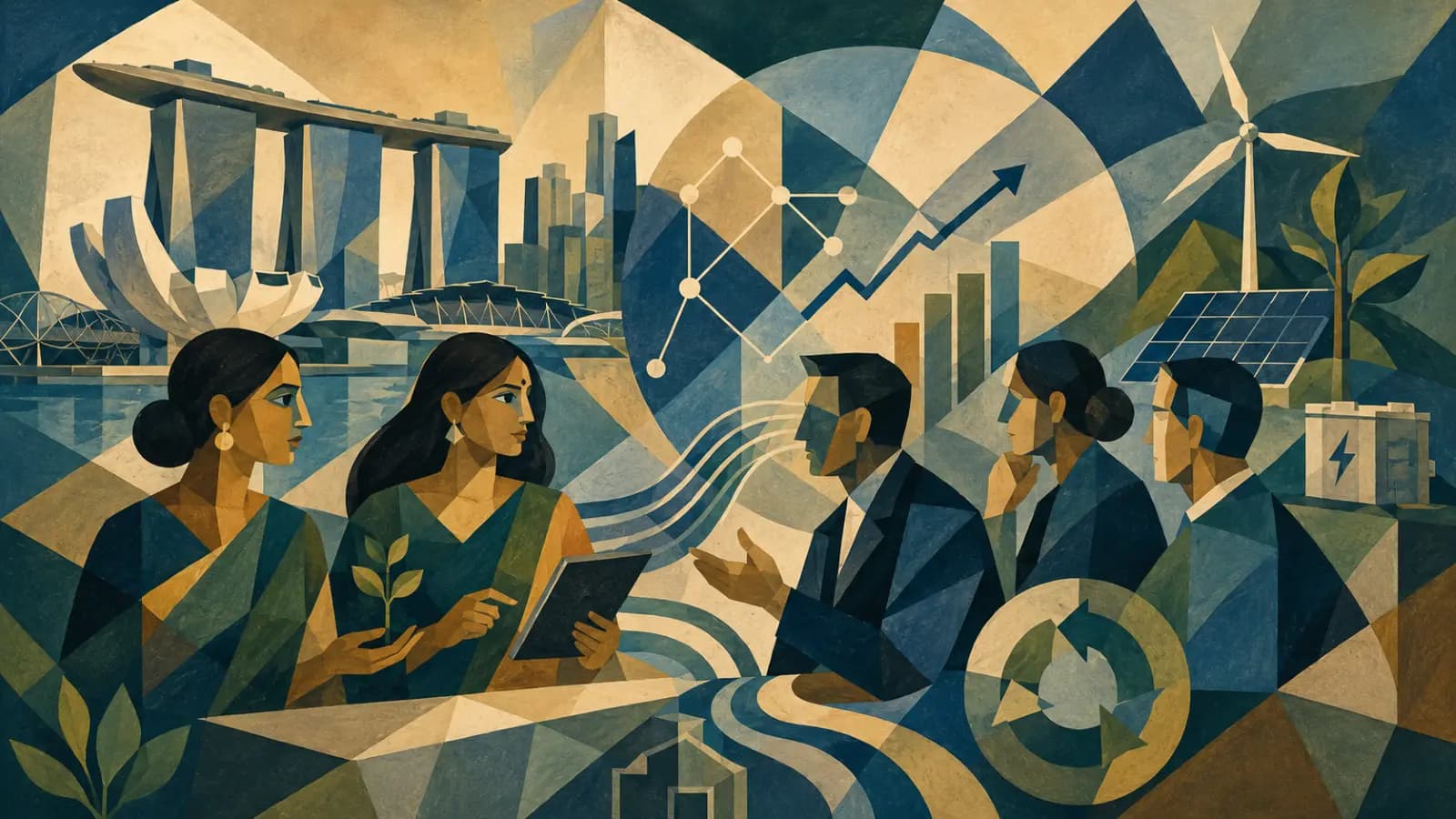
On March 5, 2026, Project SAFFAL convened a high-impact Investor & Donor Summit in Singapore, bringing together global leaders across climate finance, philanthropy, and innovation.
Co-hosted by Massive Earth Foundation (MEF), UN Environment Programme (UNEP), and UN Women, the Summit marked a pivotal step toward unlocking capital for one of the most underserved segments in climate innovation: women-led climate enterprises in South Asia.
The Summit brought together development finance institutions (DFIs), donors, investors, and ecosystem partners to collectively explore how blended finance mechanisms can unlock funding for climate SMEs and accelerate gender-inclusive climate innovation in the region.
The convening focused on co-designing the South Asia Finance Facility for Acceleration & Leverage (SAFFAL) – a blended finance facility to address the persistent financing and deployment gap for women-led climate SMEs and startups.
But more than just a convening, the Summit was designed as a working session – a space to align capital, challenge assumptions, and co-create solutions.
Setting the Tone: Capital Meets Urgency
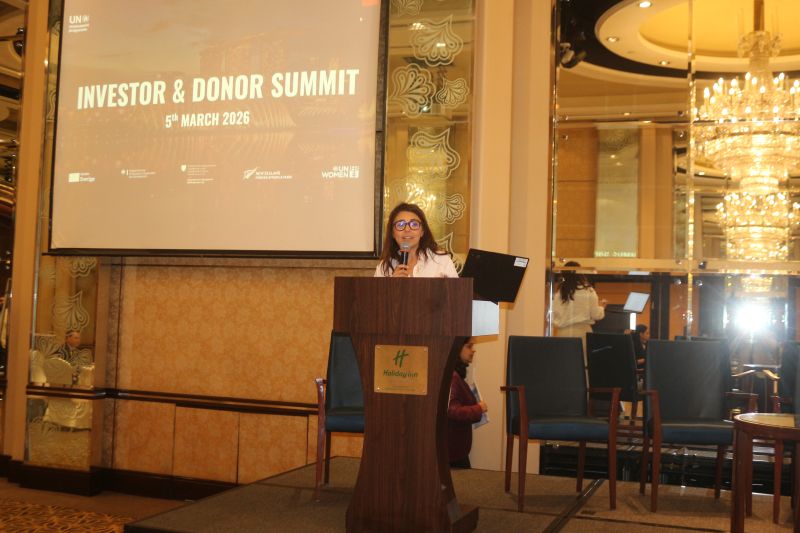
The Summit opened with a clear and urgent message from Myriem Touhami Kadiri, Head of Unit – Sustainable Investment, Climate Change Division at UN Environment Programme highlighting the urgent need to mobilize catalytic capital for women-led climate enterprises across South Asia and the importance of building financing structures that bridge the gap between capital and deployable climate solutions.
Her remarks framed the core problem the Summit sought to address:
- A disconnect between available capital and deployable opportunities
- The need for catalytic, blended finance mechanisms
- A sharper focus on women-led climate enterprises as a critical opportunity set
This framing carried through the day shaping both the discussions and the solutions that emerged.
A Convergence of Global Perspectives
The Summit was further strengthened by special remarks from global development leaders.
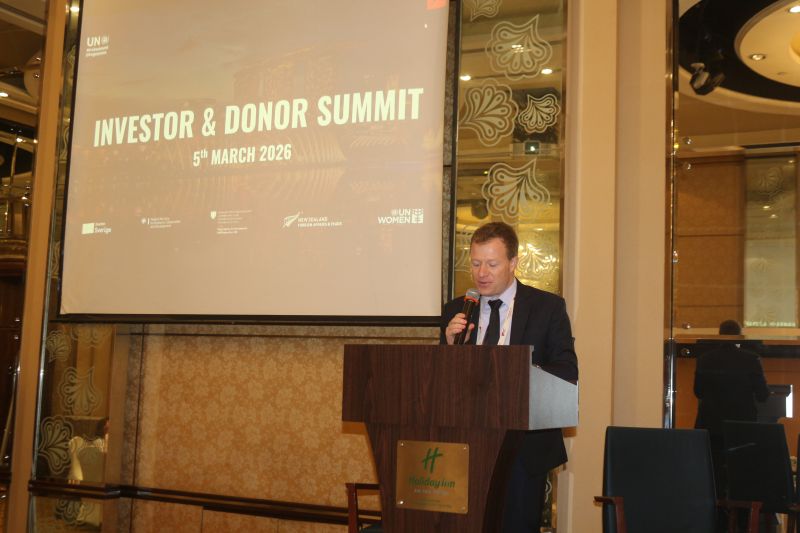
Philippe Brunet – Head of the SDC Regional Thematic Hub, Swiss Agency for Development and Cooperation – underscored the power of catalytic capital when paired with strong local ecosystems, noting that donor and development finance institutions (DFIs) can play a decisive role in accelerating climate SMEs’ growth.
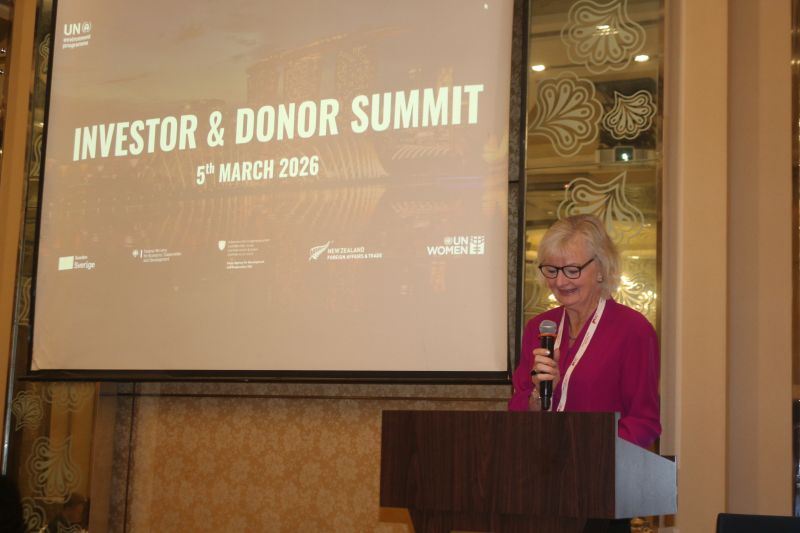
AnnaMaria Oltorp – Head of Development Cooperation Section, Regional Asia & the Pacific, Embassy of Sweden – brought a broader socio-political lens, highlighting that shrinking spaces for women’s rights globally make targeted support for women-led climate initiatives even more urgent. She also emphasized the need for robust impact measurement, ensuring that capital translates into real, accountable outcomes.
Together, these perspectives reinforced a central idea: climate finance, gender equity, and accountability must move forward together.
From Conversations to Co-Creation

What set this Summit apart was its intentionally curated, intimate format. Instead of large-scale panels with passive audiences, the gathering enabled:
- Four smaller thematic panels
- Direct interaction between investors and select enterprises
- Honest discussions on risk, returns, and constraints
- Collaborative problem-solving around financing structures
A closed-door investor roundtable surfaced practical realities – from governance expectations to deployment constraints – ensuring that the outcomes were grounded in what capital providers actually need.
Key Insights from the Summit Conversations
- Women-Led Climate SMEs: From Inclusion Narrative to Investment Thesis
One of the most powerful discussions challenged the traditional framing of gender inclusion. Panelists emphasized that women-led climate SMEs are not just underserved; they are undervalued. Operating at the intersection of climate resilience, livelihoods, and inclusive growth, these enterprises represent a compelling investment case with the potential to deliver both financial returns and systemic impact.
The shift was clear: from “supporting women” to “investing in high-potential climate solutions led by women.”
- From Grant to Scale: Unlocking Blended Finance
A central theme across discussions was the challenge of moving from grant capital to scalable investment. As highlighted in the panels, most climate enterprises require early growth capital in the range of USD 200K-1M; a stage where funding is scarce but essential.
Blended finance emerged as a critical solution:
- First-loss capital
- Guarantees
- Risk-sharing mechanisms
These instruments can transform grants into leverage tools that mobilize significantly larger pools of capital, aligning donor priorities with investor expectations.
- Building Climate-Tech Portfolios for Scale
As climate innovation accelerates, institutional investors are rethinking how to construct portfolios. A key takeaway: the Fund of Funds model is emerging as a powerful strategy, enabling diversification, access to specialized fund managers, and scaling investments across emerging markets like South Asia.
Importantly, the conversation also reflected a shift in investor mindset:
- Greater openness to CAPEX-heavy, infrastructure-led solutions
- Recognition that climate and deep tech are core to future portfolios
- Climate Alpha: Investing in the Industries of the Future
One of the most forward-looking discussions focused on identifying the next wave of climate opportunities. The message was clear: climate-tech is not just about mitigation; it is about building the industries of the future.
Key areas identified included:
- Grid-scale energy storage
- Bio-manufacturing
- Circular economy technologies
- Nuclear innovation
- Direct carbon capture
- Green hydrogen
These sectors, currently undervalued, are expected to define the next decade of global industrial growth.
- The “Pooling Gap”: A Structural Challenge
A critical concept that emerged was the “pooling gap” – the disconnect between capital availability and investable pipelines.
Addressing this requires more than funding. It demands:
- Standardized governance frameworks
- Strong pipeline development
- Technical assistance for enterprises
- Trust-based financial infrastructure
This insight directly forms the design direction for SAFFAL.
SAFFAL: Building the Missing Infrastructure
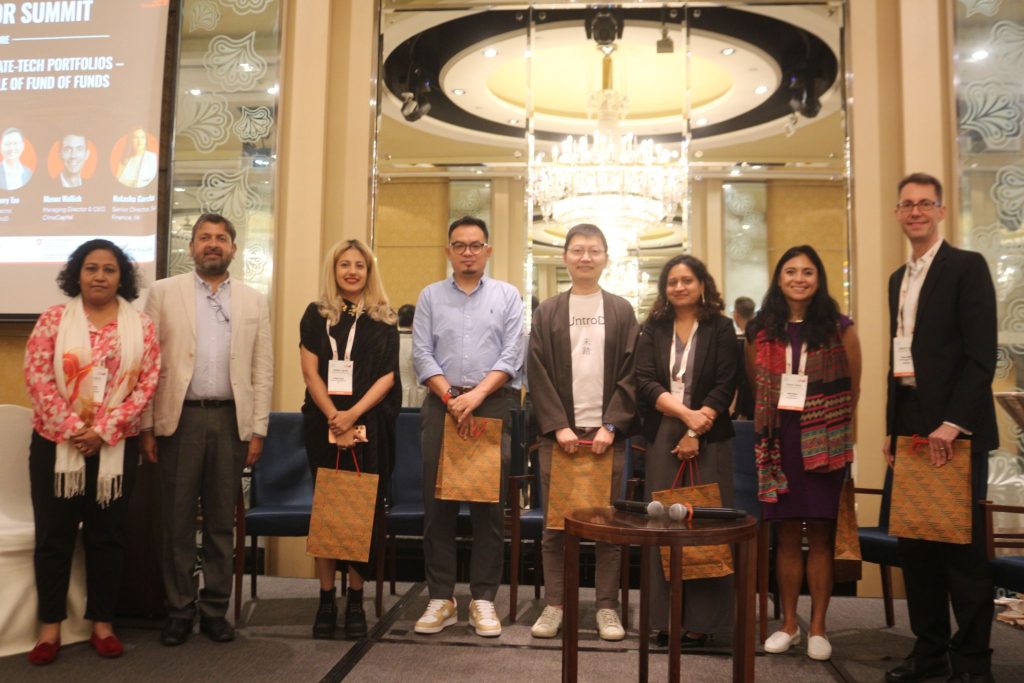
At the heart of the Summit was the co-design of the South Asia Finance Facility for Acceleration & Leverage (SAFFAL) – a blended finance facility. The goal was to unlock catalytic capital for women-led climate enterprises and build a scalable pipeline for institutional investment.
As Shailesh Vickram Singh, the Founder/Director of Massive Earth Foundation said in his address at the Investor Summit, “SAFFAL is building the missing layer, a formal investment infrastructure to route the impact capital into SMEs and a professional layer for getting the SMEs investment ready.”
There was strong alignment across stakeholders on:
- The urgency of such a facility
- The relevance of blended finance
- The need for coordinated regional action
What Happens Next
The Summit was not an endpoint; it was a launchpad.
Key next steps will include:
- Refining the SAFFAL facility design based on investor feedback
- Mobilizing anchor capital from donors and catalytic investors
- Strengthening pipelines of investment-ready women-led startups
- Deepening collaboration across South Asia and beyond
- Continuing engagement through technical working groups
Why This Summit Matters
South Asia stands at a critical intersection. It is among the most climate-vulnerable regions globally. It is also home to a rapidly growing ecosystem of climate innovators.
Yet a persistent gap remains – early-growth climate enterprises, particularly women-led, struggle to access the capital needed to scale.
As highlighted throughout the Summit, these enterprises represent the “missing middle”: too advanced for grants; too early for institutional capital.
Project SAFFAL Summit reframed this gap, not as a limitation, but as a high-potential investment opportunity waiting to be unlocked.
A Turning Point for Women-Led Climate Innovation
The SAFFAL Investor & Donor Summit reinforced a powerful idea: the future of climate innovation will not be built without women, and it cannot scale without the right capital structures. By bringing together capital providers, ecosystem builders, and entrepreneurs in one room, Project SAFFAL is helping shift the conversation from intent to implementation.
The opportunity now is clear: to convert alignment into capital flows and capital flows into climate impact at scale.
At Massive Earth Foundation, that is exactly what we aim to do, with support from UN Environment Programme, UN Women, and other ecosystem partners.
Join SAFFAL
The Climate Finance Catalyst for South Asia
Apply as an Impact Philanthropist, Donor, Startup, SME, Climate Expert, or Institution. Mobilize climate capital into the right sectors.