What Investors Look for in an Early-Stage Climate Startup

Sumita Singh
August 6, 2026
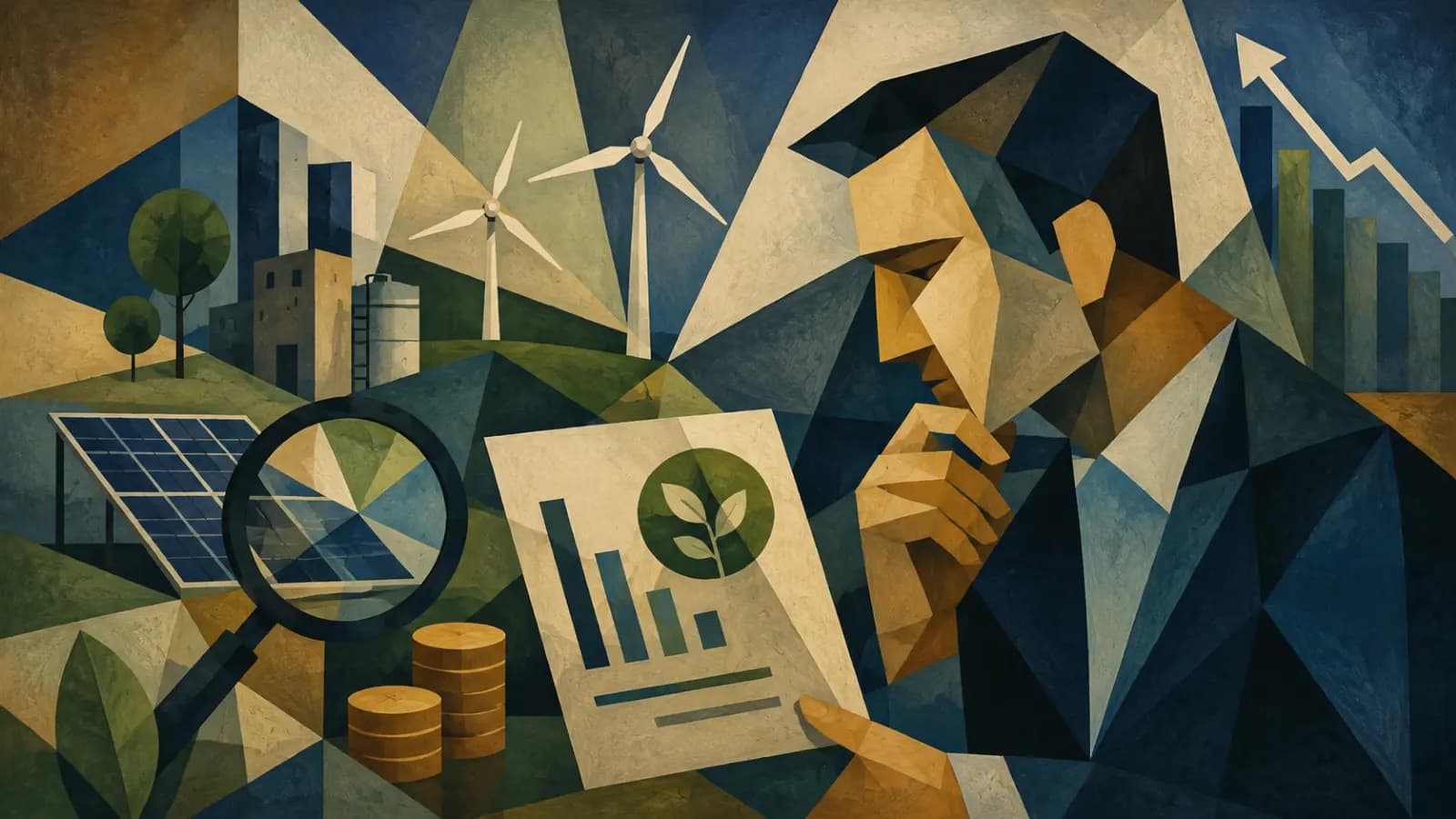
Climate tech investing has grown up fast. After a decade of enthusiasm-driven bets on big ideas, 2026 looks like a more disciplined market. According to Trellis’s 2026 climate-tech coverage, global funding reached $40.5 billion in 2025 – an 8% increase on 2024 numbers – but the market is maturing, with investors writing bigger checks to fewer companies with proven technologies rather than spreading small bets across many early ideas.
For founders raising their first institutional round – especially women-led SMEs building clean energy and low-carbon solutions in South Asia – that shift changes what “investor-ready” actually means.
Here’s what climate investors are consistently screening for at the early stage, and where South Asian founders can get ahead of the curve.
A quick scoping note: this piece focuses on equity and commercial investors – venture funds, angel investors, and climate-focused funds seeking financial returns – rather than grants, philanthropic capital, or development finance, which typically evaluate founders on a different set of criteria altogether. If that’s the capital you’re pursuing, our companion piece on what impact investors, philanthropies, and grantmakers look for covers that ground instead.
1. Traction Matters More Than Technology for Early-Stage Climate Investors
A strong idea used to be enough to open a conversation. It no longer is. Investors now want evidence that the market wants what you’re building – a paid pilot, a signed letter of intent, an early anchor customer. A prototype built without any outside validation is treated as a near-universal red flag rather than a starting point. If you haven’t sold anything yet, the next best proof point is a credible, named pilot partner and a clear plan to convert that pilot into revenue.
“A prototype built without any outside validation isn’t a starting point for investors. It’s a red flag.”
Within the Project SAFFAL cohort, a Nepal-based women-led agro-processing enterprise illustrates this well – it dehydrates over 200 metric tons of local fruits, seasonal rares, and spices annually for smallholder and indigenous farming communities, a concrete operational scale that speaks louder than a pitch deck ever could.
2. Why Climate Investors Back Teams That Can Innovate and Execute
Climate hardware and infrastructure businesses live and die on execution – manufacturing, supply chains, regulatory approvals, field deployment. Investors are ultimately backing teams with a clear path to market, not just a compelling technology, so they look for founders who combine deep technical credibility with the operational experience to actually build and scale the thing.
For founders in the SAFFAL cohort, this is a place to be explicit: name the technical, commercial, and operational strengths already inside your team, and be honest about the gaps you’re hiring or advising around.
3. Capital Efficiency: How Early-Stage Climate Startups Prove a Realistic Path to Scale
Unlike software, climate tech is often capital-intensive – manufacturing lines, hardware, physical infrastructure. Investors want to see plausible burn rate, capital expenditure needs, and a path to scalable revenue laid out clearly. A vague “we’ll figure out unit economics later” is a bigger problem in climate tech than in most other sectors, because the capital intensity leaves less room for course-correction. Show the model, show the assumptions, and show why the numbers are conservative rather than aspirational.
4. Regulatory and Policy Dependency: What Climate Tech Investors Want to See
Climate businesses are often shaped by policy – subsidies, carbon pricing, renewable energy mandates, import duties on clean-tech components. If a plan leans on a major policy dependency – such as a subsidy program or an offtake agreement – investors expect founders to call it out rather than dance around it. Founders who proactively name this dependency and show a plan that survives a less favourable policy environment, build more credibility than those who avoid the topic.
5. Why Climate Impact and Commercial Viability Must Be Argued Together
“Impact” alone no longer closes a round. Investors are looking for businesses that can quantify their environmental impact – emissions avoided, resources saved, communities served, while also showing a believable commercial engine underneath it. The strongest early-stage pitches treat impact and revenue as reinforcing each other, not as competing priorities to be balanced.
An India-based women- and youth-led venture, part of the SAFFAL cohort, is working with rural and tribal communities and is converting crop residue into biochar and earning directly through verified carbon credits, tying environmental impact to income in the same transaction.
Climate Tech Investment Trends in 2026: Where Investor Attention Is Moving
It’s also worth knowing where investor attention is currently concentrated, because it shapes how a pitch gets read.
Trellis’s 2026 analysis found that climate adaptation funding rose 64% as investors and buyers increasingly treat a hotter planet as an operational risk rather than a distant environmental one. The same analysis found that AI-enabled climate solutions now capture close to 28 cents of every climate-equity dollar invested, with data-centre-related deals alone pulling in nearly $2 billion. Founders don’t need to force-fit their business into these categories but understanding where investor appetite is moving helps frame a pitch in language investors are already primed to respond to.
Founder Checklist: Are You Investor-Ready?
☐ Do you have a paid pilot, signed LOI, or an early anchor customer, not just a working prototype?
☐ Can your team point to real execution experience (manufacturing, supply chain, field deployment), not just technical innovation?
☐ Can you clearly state your burn rate, CapEx needs, and what each funding round is meant to unlock?
☐ Have you named any policy or subsidy dependency in your business model, and shown a plan that survives if it changes?
☐ Can you explain your environmental impact and your revenue model as one connected story, not two separate pitches?
What a Weak Pitch Looks Like
Picture a founder pitching a solar-powered irrigation device with strong lab results – but no field pilots, no paying customers, and a two-person team with no manufacturing or distribution experience. The ask is for $2 million, with no breakdown of capital expenditure or burn rate. The deck leans entirely on impact language – communities served, emissions avoided – without ever explaining who pays for the product or how a policy change might affect the business. It’s the kind of pitch that sounds inspiring in the room but leaves an investor with more open questions than answers.
What Climate Investors Look for in Women-Led Climate SMEs in South Asia
A few things are worth knowing for SAFFAL-cohort founders specifically.
First, a CrossBoundary analysis of gender-lens investing in emerging markets found that women-led startups delivered 78 cents in returns for every dollar of funding, compared to 31 cents for male-founded startups – meaning the investment case for backing women-led climate SMEs isn’t just about equity, it’s about outperformance.
“Women-led startups deliver 78 cents in returns for every dollar of funding – the investment case isn’t just about equity, it’s about outperformance.”
That said, the same analysis notes that gender-lens investing adoption in South Asia still lags behind other emerging-market regions – so the performance case is strong, but the investor behaviour hasn’t fully caught up to it yet, which is precisely the gap SAFFAL is working to close.
Second, much of the growth capital available to women-led climate SMEs in South Asia is blended or concessional – grant capital, development finance, and gender-lens funds working alongside commercial investors – rather than pure venture capital. Framing a raise as fitting into that blended-capital pipeline, rather than trying to look like a Silicon Valley venture case, often resonates better with the funders actually active in this region.
Third, ticket sizes in South Asia tend to be smaller and diligence more relationship-driven, which means the traction and team narrative – points 1 and 2 above – carry disproportionate weight relative to markets where large funds can absorb more risk.
Key Takeaways: How to Make Your Climate Startup Investor-Ready
None of this needs a perfect pitch deck. It needs honest answers to a few uncomfortable questions:
- What’s actually been proven so far – not what’s planned, what’s proven.
- Your team’s execution track record, and where the real gaps are.
- Exactly what the money unlocks, not just what it’s for.
- A plan that still holds up if the policy support disappears tomorrow.
- One story where the impact and the revenue explain each other, instead of two separate pitches bolted together.
Project SAFFAL (South Asia Finance Facility for Acceleration and Leverage) is Massive Earth Foundation‘s initiative dedicated to empowering women-led SMEs across South Asia to scale clean energy and low-carbon technology solutions and is run in collaboration with UN Environment Programme and UN Women. Launched in 2025-2026, it drives both environmental impact and gender equity by connecting these businesses with funding, mentorship, and a platform to grow.
This is exactly the kind of investor-readiness work Project SAFFAL is built around – helping women-led clean energy and low-carbon SMEs across South Asia sharpen these answers, connect with the right capital, and scale with both environmental and commercial credibility.
Join SAFFAL
The Climate Finance Catalyst for South Asia
Apply as an Impact Philanthropist, Donor, Startup, SME, Climate Expert, or Institution. Mobilize climate capital into the right sectors.