Rising Opportunity in Climate Impact Investing: Why Investors Are Paying Attention

Sumita Singh
May 17, 2026

In 2024, global investment in the energy transition surpassed USD 2.1 trillion for the first time, according to BloombergNEF. That milestone mattered not only for its scale, but for what it signalled: climate is no longer being treated as a peripheral sustainability concern. It is increasingly being viewed as a long-term economic and industrial transition.
This shift is changing how impact funds, family offices, and catalytic capital providers think about long-term allocation strategies. Climate has moved beyond the language of corporate responsibility and entered the language of resilience, infrastructure, and market creation.
Yet beneath this momentum lies a less discussed reality: while climate capital is growing rapidly, access to investable climate innovation remains deeply uneven.
That imbalance may define the next phase of climate investing.
Climate Has Become an Investment Category; Not Just a Sustainability Theme
A decade ago, climate investing was often grouped into narrow ESG allocations or concessionary capital strategies. Today, it cuts across energy systems, agriculture, mobility, manufacturing, supply chains, water systems, insurance, and adaptation infrastructure.
This evolution is being driven by three simultaneous shifts:
First, climate risk has become economically visible. Extreme heat, flooding, supply chain disruptions, and resource volatility are no longer abstract projections. They are already affecting productivity, insurance markets, food systems, and urban infrastructure.
Second, climate technologies have matured. Sectors that once depended heavily on subsidies are increasingly approaching commercial viability. In several markets, solar and storage economics have fundamentally changed energy investment calculations.
Third, institutional capital has started treating climate as a long-duration structural transition rather than a thematic allocation.
This broader shift is also visible across the impact investing landscape itself.
According to the Global Impact Investing Network (GIIN), the global impact investing market has surpassed USD 1.1 trillion in assets under management, reflecting how sustainability-linked investing has moved steadily toward mainstream capital allocation strategies.
According to the Climate Policy Initiative (CPI), annual global climate finance flows reached approximately USD 1.3 trillion in 2021/22, nearly doubling compared to levels a decade earlier.
The direction of travel is clear. What is less clear is whether the current investment infrastructure is capable of channelling this capital toward the most impactful climate ventures.
The Contrarian Reality: Climate Investing Has a Pipeline Problem
The dominant narrative around climate finance still revolves around capital scarcity. But increasingly, the more important constraint may be deployment readiness.
There is substantial investor appetite for impact investment opportunities linked to climate resilience, adaptation, and low-carbon transitions. What remains limited is the availability of structured pipelines that help investors identify, evaluate, and support investment-ready enterprises, particularly in emerging markets.
In many ecosystems, promising founders remain trapped between two worlds:
- too early for institutional capital,
- but too operationally complex for traditional grant structures.
This creates a structural disconnect.
Investors frequently struggle to source de-risked opportunities with credible governance, technical validation, and operational maturity. Meanwhile, founders struggle to navigate fragmented ecosystems with limited access to mentorship, networks, and strategic support.
The result is not a lack of innovation. It is a lack of connective infrastructure.
The climate sector may not have a capital shortage problem; it has a pipeline and ecosystem problem.
Emerging Markets Are Quietly Becoming the Next Climate Frontier
Much of the climate investment conversation still gravitates toward North America and Europe. Yet some of the most consequential climate vulnerabilities, and potentially the most scalable adaptation innovations, are emerging elsewhere.
South Asia is a particularly important example. The region faces escalating pressures across agriculture, water systems, urban resilience, and energy access. According to the World Economic Forum (WEF), climate change could reduce GDP in parts of South Asia by as much as 10–18% by 2050 under severe warming scenarios.
But climate vulnerability also creates conditions for innovation. Across the region, startups are building solutions around:
- decentralized renewable energy,
- regenerative agriculture,
- climate-resilient livelihoods,
- waste circularity,
- water efficiency,
- and community-scale adaptation systems.
Many of these businesses do not resemble traditional venture-backed software companies. Their growth pathways are often slower, more operationally intensive, and deeply embedded within local economies. That is precisely why they are frequently overlooked.
And yet, these enterprises may ultimately become some of the most important components of long-term climate resilience.
The Hidden Opportunity Inside Climate Investing
Within this broader investment gap lies another overlooked segment: women-led climate enterprises.
Despite growing discussion around diversity and inclusion, capital allocation patterns remain heavily skewed. Research from International Finance Corporation (IFC) and multiple venture datasets continue to show that women founders receive only a small fraction of global venture funding, including within climate sectors.
This is often framed as an inclusion issue. It is equally an efficiency issue.
Women-led climate enterprises frequently operate close to the realities of communities experiencing climate stress directly, particularly in sectors like agriculture, waste management, livelihoods, and local adaptation systems. Their businesses are often designed around practical implementation rather than purely technological disruption.
In coastal regions of India and Bangladesh, for instance, women-led and community-driven initiatives are restoring mangrove ecosystems to protect vulnerable shorelines from erosion, flooding, and cyclones. These projects not only strengthen climate resilience, but also create local livelihoods through nursery management, restoration work, and ecosystem stewardship.
Similarly, women entrepreneurs working in decentralized waste-management and composting systems are helping urban communities reduce landfill emissions while creating circular-economy livelihood models at the local level.
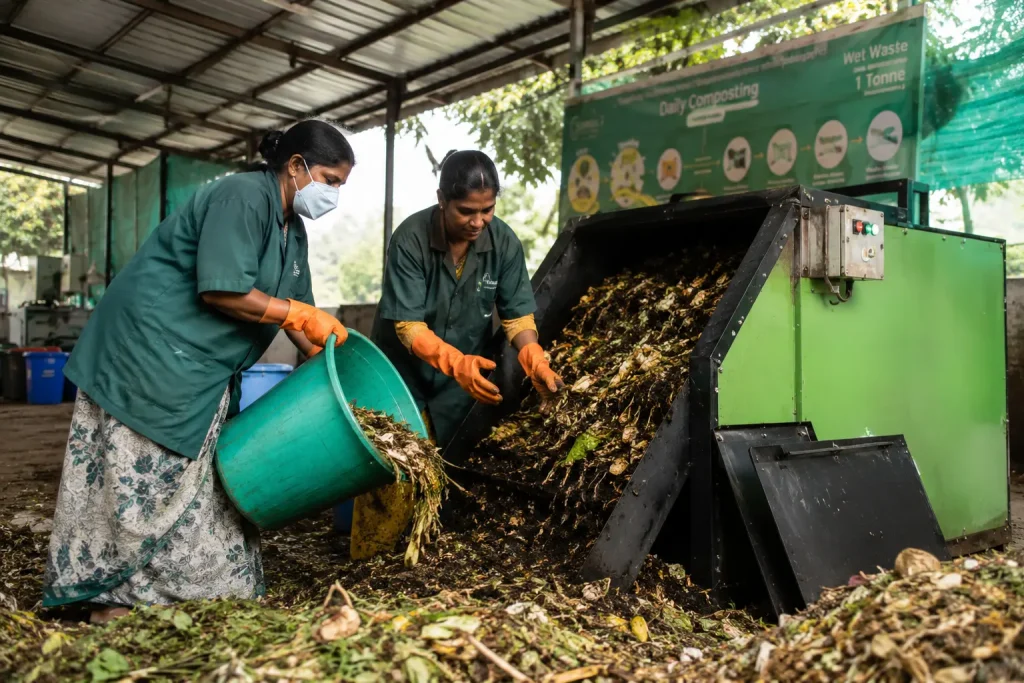
As a result, they may be addressing forms of climate vulnerability that remain underpriced within traditional investment models.
Some of the most compelling global impact investment opportunities for climate innovation may therefore emerge not from the most visible ecosystems, but from founder groups that conventional capital networks continue to underestimate.
Women-led climate enterprises are not merely an inclusion opportunity. They may represent one of the market’s most overlooked allocation inefficiencies.
Why Traditional Investment Models Struggle in Climate Ecosystems
Climate ventures often do not fit neatly within standard venture capital frameworks.
Many require longer development timelines, operational partnerships, regulatory navigation, and ecosystem coordination before scale becomes visible. Particularly in adaptation-focused sectors, value creation can be gradual, distributed, and difficult to benchmark against traditional software-style growth metrics.
This is one reason why many climate businesses appear “too early” for institutional capital long before their long-term relevance becomes visible.
Early-stage climate startups often require:
- technical validation,
- market access,
- strategic mentorship,
- and long-term patient capital.
Technical validation is particularly important because many climate solutions operate within real-world physical systems where reliability, resilience, and implementation performance matter as much as innovation itself.
Market access remains another major bottleneck. Founders frequently navigate fragmented supply chains, procurement systems, and institutional barriers before achieving meaningful commercial traction.
Strategic mentorship also plays an outsized role. Climate entrepreneurs are often balancing scientific, operational, regulatory, and commercial complexities simultaneously, far beyond what early-stage founders in many conventional sectors face.
And unlike sectors driven by rapid consumer adoption cycles, climate businesses frequently require patient capital structures aligned with longer implementation horizons.
Traditional venture models, however, are often optimized for speed, repeatability, and short feedback loops. Climate ecosystems rarely behave that way.
This is where conventional financing logic begins to break down.
Rise of Ecosystem-Led Climate Investing
Increasingly, the conversation is shifting from funding individual startups toward building ecosystems capable of producing investable climate enterprises consistently.
That distinction matters.
Over the past several months, while conducting more than twenty mentor sessions with women-led climate startups across South Asia under Project SAFFAL, one pattern became impossible to ignore. Founders were not only asking questions about fundraising. They were seeking guidance on regulatory compliance, vendor networks, hiring, market positioning, patents, storytelling, distribution, logistics, and strategic partnerships.
In other words, the capital gap was only one layer of a much larger ecosystem gap.
This observation challenges a common assumption within climate finance – that funding alone unlocks climate innovation. In reality, many promising enterprises fail not because the ideas lack merit, but because the surrounding support infrastructure remains fragmented.
This is where ecosystem-led approaches are becoming increasingly important.
The future of effective climate innovation investment may depend less on isolated capital deployment and more on building systems that combine:
- mentorship,
- founder readiness,
- catalytic capital,
- blended finance,
- investor access,
- and long-term ecosystem relationships.
Within this framework, platforms like Project SAFFAL begin to serve a different function altogether – not merely as accelerators, but as discovery and de-risking infrastructure for climate investors seeking credible exposure to underserved innovation ecosystems.
The future of climate investing may depend less on isolated capital deployment and more on building ecosystems capable of producing investable climate enterprises consistently.
Looking Ahead: The Next Climate Investment Frontier
The next phase of climate investing will likely be defined less by the availability of capital and more by the sophistication of deployment.
The investors best positioned for long-term value creation may not be those competing within already crowded climate sectors, but those capable of engaging early with emerging ecosystems before they become fully visible to mainstream capital.
For long-horizon investors, some of the most compelling climate opportunities may still be hiding inside ecosystems that mainstream capital continues to view as fragmented or premature. This requires a different investment posture:
- deeper ecosystem engagement,
- longer-term relationship building,
- comfort with blended financing structures,
- and a willingness to evaluate resilience and adaptation alongside conventional growth metrics.
It also requires recognizing that many future climate leaders may emerge from ecosystems that still appear fragmented today.
Climate investing is no longer simply about identifying technologies. Increasingly, it is about identifying ecosystems capable of producing durable climate solutions over time. That distinction may shape where the next generation of meaningful climate value is created.
The future climate leaders already exist. Many are already building in underserved markets, solving deeply local problems with globally relevant implications.
The next climate leaders may not emerge from the world’s most capitalized ecosystems, but from the ecosystems still learning how to absorb capital effectively.
Join SAFFAL
The Climate Finance Catalyst for South Asia
Apply as an Impact Philanthropist, Donor, Startup, SME, Climate Expert, or Institution. Mobilize climate capital into the right sectors.