Renewable Energy in South Asia: Beyond Electricity, Towards Economic Opportunity

Sumita Singh
July 31, 2026
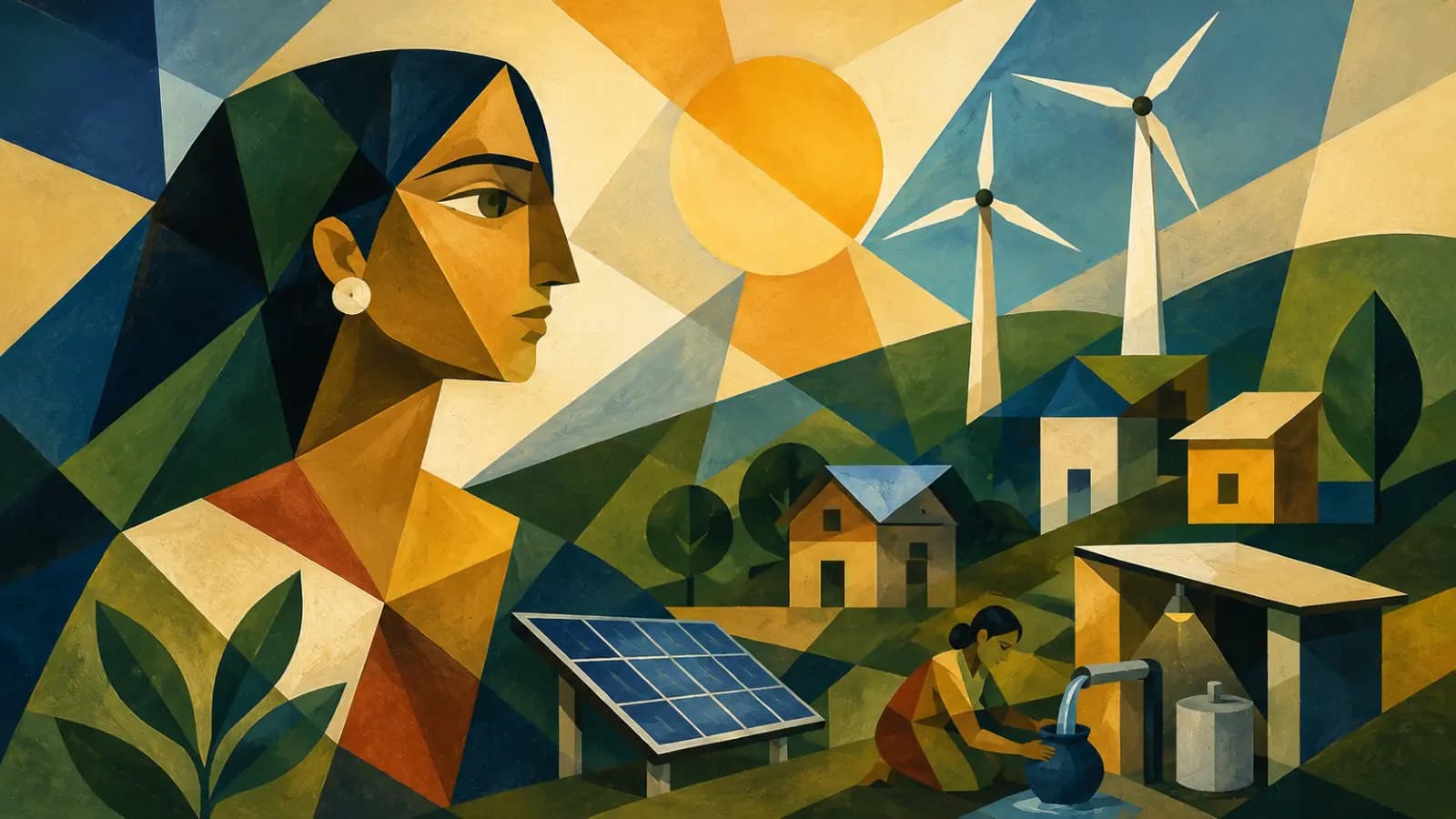
For years, South Asia’s renewable energy transition has been measured largely in megawatts installed and electricity generated. But the region’s next chapter will be defined by something very different: what renewable energy enables.
Governments have announced ambitious clean energy targets, utilities have expanded solar and wind capacity, and investors have financed large-scale projects to accelerate the transition away from fossil fuels. These efforts have played a vital role in improving electricity access and advancing the region’s climate ambitions.
Yet, as South Asia’s economies continue to grow, the energy transition is entering a new phase. According to the International Energy Agency (IEA) Southeast Asia Energy Outlook 2024, electricity demand in Southeast Asia is expected to rise by around 4% annually, while emerging Asian economies continue to account for a significant share of global electricity demand growth. This expansion will require not only additional renewable generation, but also more flexible and distributed energy systems.
Increasingly, the question is no longer simply how much clean electricity can be generated, but what that electricity makes possible.
Reliable renewable energy can enable farmers to irrigate their fields, power rural enterprises, support digital connectivity, strengthen community infrastructure, and create new economic opportunities. In this sense, renewable energy is evolving beyond an environmental solution to become a foundation for development.
The women-led climate enterprises participating in Project SAFFAL (South Asia Finance Facility for Acceleration and Leverage) – an accelerator program conducted by Massive Earth Foundation in collaboration with UN Environment Programme and UN Women – reflect this broader shift. Across South Asia, these enterprises are integrating renewable energy into agriculture, mobility, housing, community infrastructure, and local enterprise – not as an end in itself, but as a means of improving productivity, resilience, and livelihoods.
Together, these enterprises reveal an important pattern: South Asia’s renewable energy transition is no longer defined solely by the generation of clean electricity. It is increasingly about building stronger local economies and expanding economic opportunity through clean energy. The examples highlighted throughout this article are drawn from the women-led climate enterprises participating in Project SAFFAL and illustrate broader innovation trends emerging across the region.
Renewable Energy Is Becoming Productive Infrastructure in South Asia
One of the clearest ways this shift is becoming visible is in how renewable energy is being integrated into everyday economic activity.
Infrastructure has always been the foundation of economic development. Roads connect markets, telecommunications enable businesses, and water systems support agriculture and industry. Now, clean energy is becoming part of this essential infrastructure – not simply by supplying clean electricity, but by enabling livelihoods and economic activity.
In South Asia, where agriculture and small enterprises remain central to local economies, the implications are particularly significant. Here, the value of electricity lies not merely in its availability, but in what it allows people to achieve.
Agriculture offers a compelling example. Across the region, millions of farmers continue to depend on diesel pumps or unreliable grid electricity for irrigation, leaving them vulnerable to rising fuel costs, power outages, and increasingly erratic weather patterns. At the same time, irrigation accounts for nearly 70% of global freshwater withdrawals, according to the Food and Agriculture Organization (FAO), highlighting the growing need for energy solutions that improve both water and resource efficiency.
A Nepal-based women-led climate enterprise has responded by developing portable hybrid solar-powered water pumping systems that provide irrigation while also supplying electricity for household and community use during non-irrigation periods, extending the value of each installation beyond agriculture. By serving multiple productive purposes, the solution maximizes the value of every unit of clean energy generated.

Similarly, a Sri Lanka-based women-led climate enterprise is integrating renewable energy technologies across agriculture, housing, and infrastructure. It is designing and deploying collapsible, off-grid modular housing units powered by solar panels for rural, disaster-prone, and eco-tourism zones. Instead of addressing energy, housing, and agriculture separately, it combines them into a single model that strengthens resilience while supporting livelihoods.
These innovations reflect a broader shift towards the productive use of renewable energy – an approach that designs clean energy systems around income-generating activities rather than consumption alone. The World Bank has highlighted productive uses such as agriculture, small enterprises, and community services as some of the most effective ways distributed renewable energy can generate lasting development outcomes.
Viewed as a whole, these enterprises demonstrate that renewable energy is no longer simply replacing fossil fuels. It is becoming productive infrastructure – powering farms, supporting rural enterprises, and creating the conditions for stronger local economies.
Reliable Energy Is Creating New Local Economies in South Asia
If the first phase of South Asia’s clean energy transition focused on expanding electricity access, the next phase is focusing on improving reliability and enabling economic activity.
Across the region, businesses, healthcare facilities, telecommunications networks, and transport systems continue to face disruptions caused by power outages, voltage fluctuations, and rising energy costs. As economies become more digital and interconnected, dependable electricity is becoming as important as access itself. According to the International Energy Agency (IEA), growing demand from electric mobility, digital services, cooling, and industry is increasing the need for more flexible and distributed energy systems.
This shift is creating new opportunities for climate enterprises that are building decentralized clean energy solutions around the needs of local economies rather than electricity generation alone.
Electric mobility offers one example. As South Asia accelerates the adoption of electric vehicles, the Asian Development Bank (ADB) notes that the energy transition will require significant investments in charging infrastructure and supporting energy systems.
Responding to this need, an India-based women-led climate enterprise is developing solar-powered EV charging plazas and highways powering e-trucks, with the vision to create solar-powered charging corridors for electric trucks travelling between industrial and logistics hubs. A Bangladesh-based climate SME is building hybrid solar-powered EV charging and battery-swapping infrastructure. Together, these innovations demonstrate how renewable energy is becoming an integral part of clean mobility ecosystems.
What do these examples tell us? They suggest that the next generation of renewable energy businesses is not being built around electricity generation alone. Instead, clean energy is becoming an enabling layer beneath entirely new industries – from electric mobility to digital infrastructure – creating value by making these sectors more reliable, efficient, and commercially viable.
A similar pattern is emerging in bioenergy. An India-based climate enterprise is converting agricultural residues into Bio-CNG and other renewable fuels, transforming farm waste into a valuable energy resource while creating additional income opportunities for farmers. Rather than treating agricultural residues as waste, the enterprise illustrates how clean energy can strengthen circular rural economies and diversify local livelihoods.
Although these enterprises operate in different sectors, they reveal the same underlying trend. Perhaps the biggest shift is that renewable energy is no longer emerging as a standalone sector. It is increasingly becoming an enabling layer beneath agriculture, mobility, housing, manufacturing and digital infrastructure. For South Asia’s millions of micro-, small-, and medium-sized enterprises, this shift is particularly significant. Reliable, decentralised energy lowers operating costs, improves productivity, and enables businesses to grow in places where unreliable electricity has long constrained economic opportunity.
The low-carbon energy transition, therefore, is no longer only about replacing fossil fuels. Now, it is also about creating the conditions for stronger local economies powered by clean, reliable, and increasingly decentralised energy.
“The most important shift is not where renewable energy is generated, but where it creates value. That value lies in stronger livelihoods, more resilient infrastructure, and new economic opportunities.”
The Future of Renewable Energy Is Distributed and Community-Led
A third pattern emerging across South Asia is the shift towards distributed, community-led energy systems. As renewable technologies become more affordable and modular, electricity can increasingly be generated, stored, and managed closer to where it is needed.
For many rural and climate-vulnerable communities, decentralised systems offer a practical complement to conventional grid expansion while improving resilience against power disruptions and extreme weather events. The International Renewable Energy Agency (IRENA) identifies decentralised renewable energy as one of the most effective approaches for improving resilience in remote and climate-vulnerable communities because local systems can continue operating even when centralised infrastructure is disrupted.
More significantly, this shift is changing who participates in the energy transition. Communities are no longer simply consumers of electricity; they are increasingly becoming producers, managers, and custodians of local energy systems.
One example comes from a South Asian women-led social enterprise that trains women in last mile communities as solar engineers, equipping them with the skills to install, maintain, and manage decentralised clean energy systems within their own communities. Beyond expanding energy access, this model creates local employment, builds technical capacity, and ensures that renewable energy infrastructure remains sustainable long after installation. It also challenges traditional assumptions about who leads infrastructure development.
According to IRENA’s Renewable Energy: A Gender Perspective, women remain underrepresented across the clean energy workforce, underscoring the importance of initiatives that expand their role as entrepreneurs, technicians, and decision-makers.
Taken together, the examples cited above suggest that South Asia’s renewable energy transition will not be driven by technology alone. Its long-term success will depend equally on building local ownership, strengthening community capacity, and ensuring that the benefits of clean energy are widely shared.
“Some of South Asia’s most promising renewable energy innovations are not replacing the grid – they are reimagining how communities generate, share, and benefit from energy.”
What Renewable Energy Innovation Patterns in South Asia Reveal
Viewed across the SAFFAL cohort, these enterprises reveal a common direction of travel. Renewable energy innovation is becoming less about generating electricity and more about enabling economic development.
Three interconnected patterns stand out.
First, renewable energy is increasingly being designed for productive use, enabling agriculture, enterprise, and essential services rather than simply powering homes.
Second, innovation is improving reliability as much as access, with distributed energy systems supporting mobility, rural businesses, and local industries.
Finally, the transition is becoming more decentralised and community-led, creating opportunities for greater local ownership and participation.
These patterns suggest that South Asia’s renewable energy transition will be defined not only by the capacity it installs, but by the livelihoods it supports, the businesses it enables, and the resilience it builds. They also mirror a broader shift in global investment priorities.
According to BloombergNEF’s Energy Transition Investment Trends, investment in the energy transition is increasingly flowing not only into renewable power generation, but also into enabling infrastructure such as energy storage, electrification, and grid modernization. For South Asia, this underscores that the next phase of the energy transition will depend as much on strengthening the systems that support clean energy as on expanding renewable capacity itself.
Why Distributed Clean Energy Systems Matter for South Asia
South Asia’s transition to a low-carbon economy will be shaped not only by large-scale renewable energy projects, but also by locally relevant innovations that address the region’s unique development challenges. As energy demand continues to grow, clean energy systems will need to be reliable, affordable, and capable of supporting livelihoods, enterprise, and resilient infrastructure – not simply supplying electricity.
The women-led climate enterprises emerging across the region demonstrate how this broader vision is taking shape. By designing renewable energy solutions around the realities of farming, mobility, housing, and community infrastructure, they show that clean energy can simultaneously advance climate goals and expand economic opportunity.
This is why the next chapter of South Asia’s energy transition is not simply about generating more renewable electricity. It is about ensuring that renewable energy powers stronger local economies, more resilient communities, and more inclusive development.
Looking Beyond the Power Grid: Mapping South Asia’s Renewable Energy Future
The examples featured throughout this article represent only a small cross-section of the women-led climate enterprises participating in Project SAFFAL.
Individually, they address challenges as diverse as irrigation, clean mobility, bioenergy, community energy systems, and resilient rural infrastructure. Collectively, however, they reveal something much more significant: renewable energy innovation in South Asia is becoming increasingly integrated with economic development.
This is precisely the broader story that Project SAFFAL seeks to illuminate. By bringing together women-led climate enterprises working across countries, sectors, and technologies, the initiative is not merely accelerating startups. It is revealing the innovation patterns that are shaping the region’s clean energy transition – from productive infrastructure and decentralised energy systems to community-led models that strengthen resilience and create economic opportunity.
As South Asia works towards a low-carbon future, these emerging patterns deserve as much attention as the technologies themselves. If these enterprises are any indication, the future of renewable energy in South Asia will be shaped not only by larger power plants or higher installed capacity, but by thousands of locally relevant innovations that make clean energy more useful, more inclusive, and more closely connected to everyday economic life.
Join SAFFAL
The Climate Finance Catalyst for South Asia
Apply as an Impact Philanthropist, Donor, Startup, SME, Climate Expert, or Institution. Mobilize climate capital into the right sectors.