From Capital to Communication: Final Reflections from Project SAFFAL Startup Mentorship Series

Sumita Singh
May 16, 2026
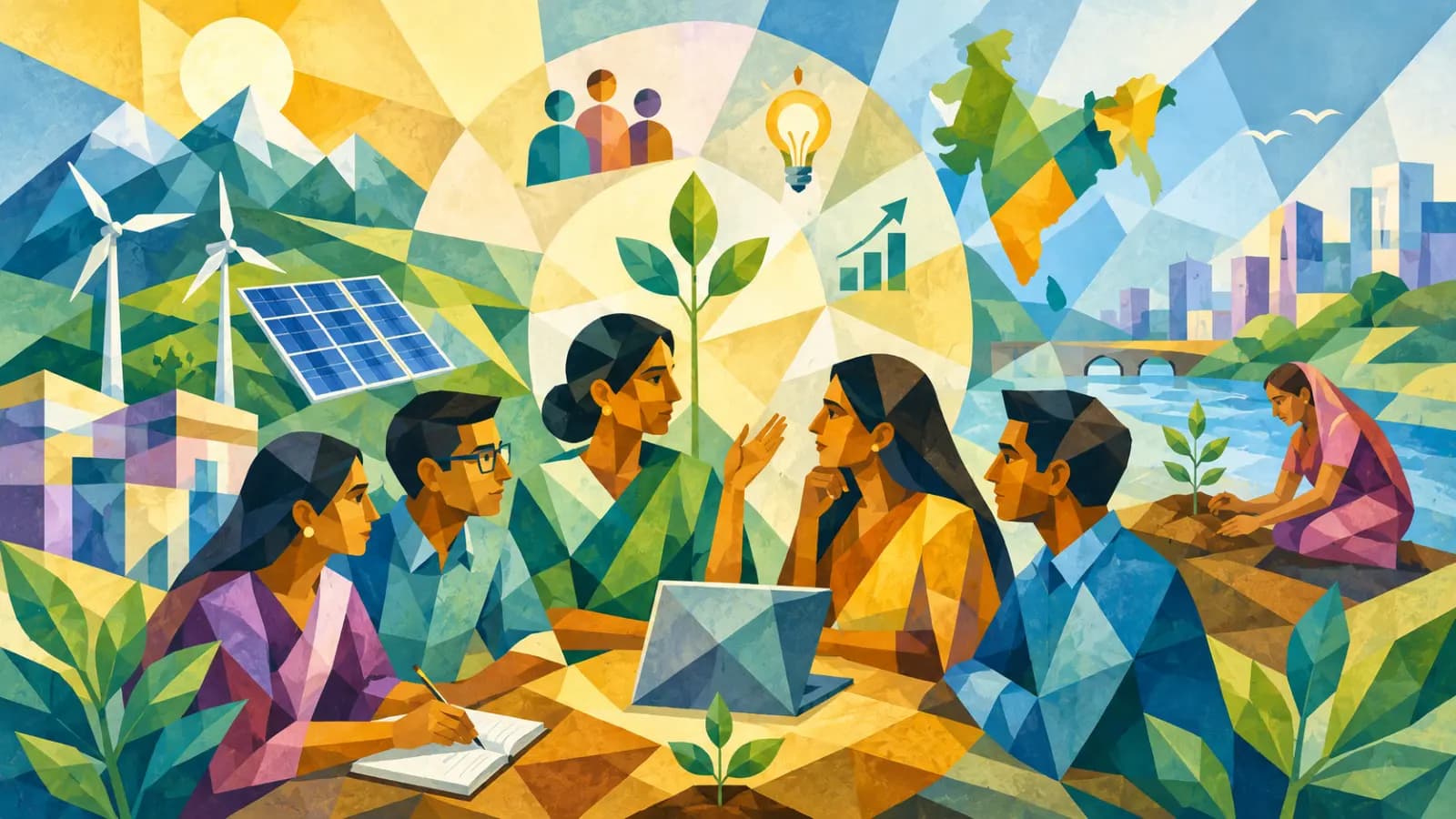
Over the course of Project SAFFAL’s Startup Mentorship Series, climate founders across South Asia engaged with investors, operators, ecosystem builders, legal experts, researchers, and communication strategists to better understand what it truly takes to build scalable climate ventures.
In a previous article, we explored the first sixteen sessions of the series and the foundational themes they addressed – including fundraising readiness, business models, investor engagement, and leadership.
The final set of mentorship sessions shifted the conversation further downstream into the realities of scaling climate innovation: securing the right kind of capital, validating products in the market, building commercial partnerships, strengthening legal and operational readiness, and communicating complex climate solutions in ways that drive trust and adoption.
Together, these sessions reinforced a broader truth:
Climate startups succeed not only because they innovate, but because they build credibility – with investors, customers, corporates, regulators, and communities.
Rather than functioning as isolated conversations, the sessions collectively mapped out interconnected dimensions of building successful climate enterprises.
Building Investor Confidence in Climate Startups
One of the strongest themes across the mentorship series was that fundraising for climate startups looks very different from traditional startup ecosystems.
Climate ventures often operate in sectors where growth takes longer, infrastructure requirements are higher, and commercial validation can take time. As a result, founders need to think more strategically not only about accessing capital, but about identifying the right kind of capital for their stage and business model.
This became a central focus during the session led by Shravan Shankar and Simmi Sareen – co-founders at Climake – on alternative financing pathways. The discussion encouraged founders to look beyond conventional venture capital and explore grants, blended finance, catalytic capital, concessional funding, and corporate-backed opportunities that are often more aligned with climate innovation journeys.
Rather than treating fundraising as a race toward valuation, the session reframed financing as a long-term strategic process.
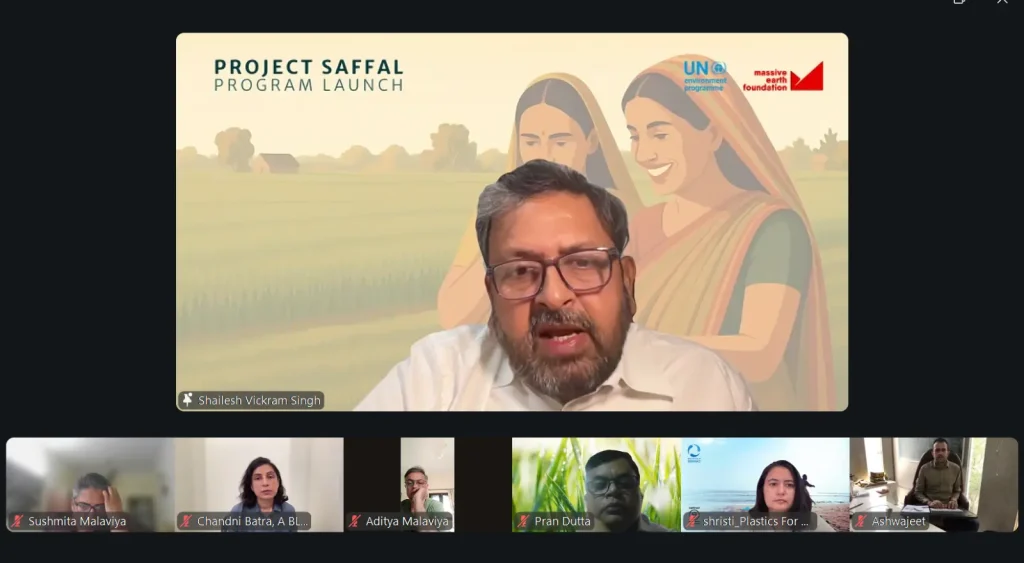
That conversation connected naturally with the session led by Shailesh Vickram Singh, Founder/Director, Massive Earth Foundation, on how investors actually evaluate startups. Founders were encouraged to understand valuation not as a formula, but as a reflection of confidence in the team’s ability to execute, scale, and navigate risk.
The discussion moved beyond numbers into questions investors quietly ask themselves during every evaluation:
- Can this team adapt under pressure?
- Is the market opportunity large enough?
- Does the startup understand its customers deeply?
- Is there evidence that the business can scale sustainably?
Together, these sessions helped founders better understand that investor readiness is not built through pitch decks alone. It is built through credibility.
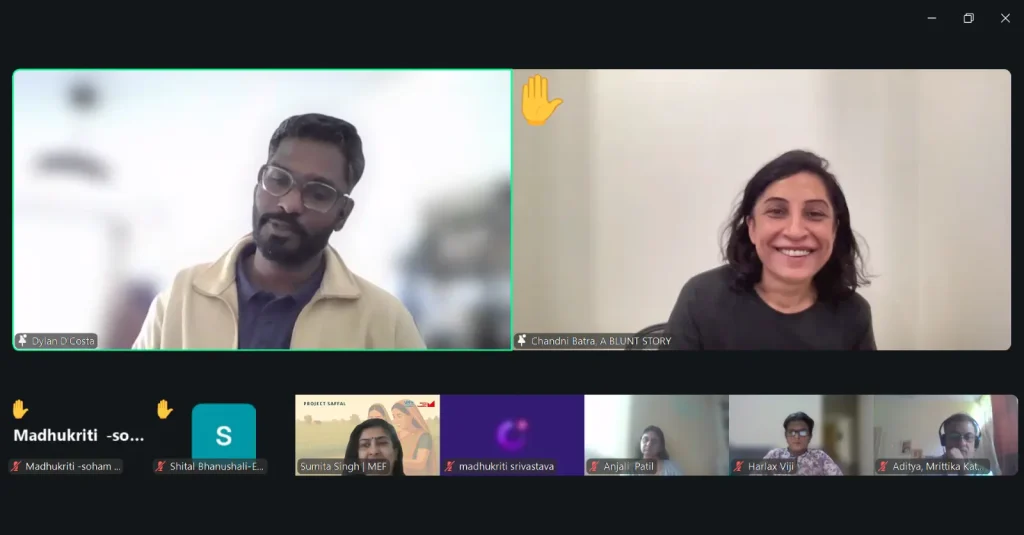
This idea was reinforced further during Dylan D’Costa’s session, which focused on the importance of demonstrating evidence rather than relying only on vision and intent. Dylan’s career spans 2-decades across impact investing, social entrepreneurship, non-profits and investment banking, and he currently works at Triodos Investment Management.
For many climate founders, purpose is naturally at the centre of their work. But the session emphasized that stakeholders increasingly expect measurable proof – proof of adoption, proof of execution, proof of customer value, and proof that impact can translate into sustainable business outcomes.
A recurring takeaway across these discussions was simple but powerful:
Climate startups become investable when ambition is supported by clarity, traction, and evidence.
From Innovation to Market Adoption
Another major thread throughout the mentorship series focused on the difficult transition from innovation to commercialization.
Many climate startups emerge from strong technical or research-driven foundations. However, technical sophistication alone does not guarantee market adoption.
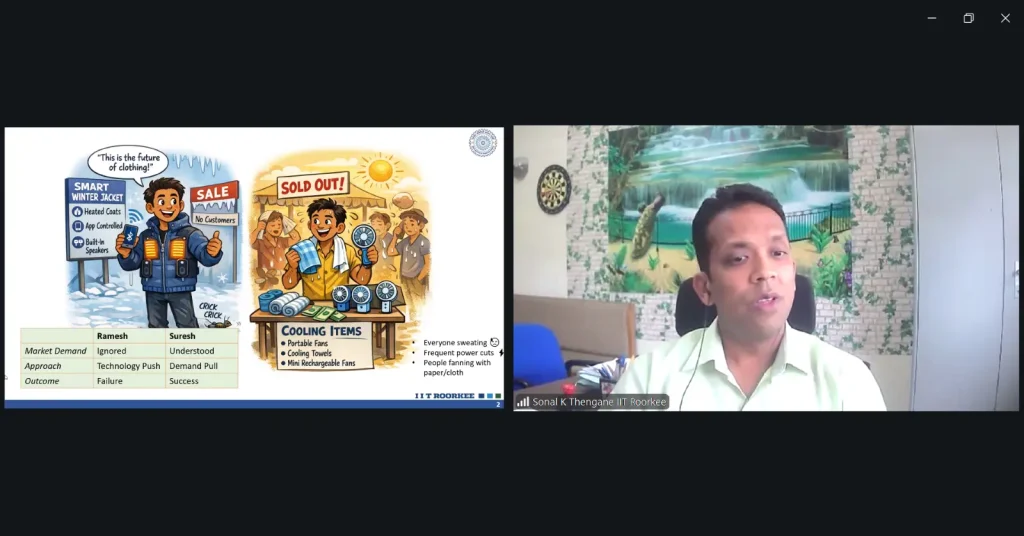
Prof. Sonal K. Thengane – Associate Professor, Department of Hydro & Renewable Energy, IIT Roorkee – explored this challenge through the lens of market-driven research and product development. Founders were encouraged to continuously test whether the problems they were solving were clearly understood and urgently felt by the market itself.
The conversation emphasized the importance of engaging customers early, validating assumptions repeatedly, and designing products that fit real operational conditions rather than idealized environments.
At its core, the session reminded founders that innovation becomes meaningful only when people are willing and able to adopt it.
At the heart of these discussions was another important reminder for founders: markets ultimately respond to value, not intention alone. Customers – whether individuals, businesses, or institutions – are willing to pay for products and services that solve problems meaningfully. In many cases, adoption happens not simply because a solution is “green” or climate-oriented, but because it is cheaper, faster, more efficient, more reliable, or significantly better than existing alternatives. For climate startups, this distinction is critical. Long-term scale becomes far more achievable when sustainability and economic value move together rather than being positioned separately.
This discussion flowed naturally into the session led by the Chief Sustainability Officer of Mahindra Group – Ankit Todi – on securing pilot projects and collaborating with corporates.
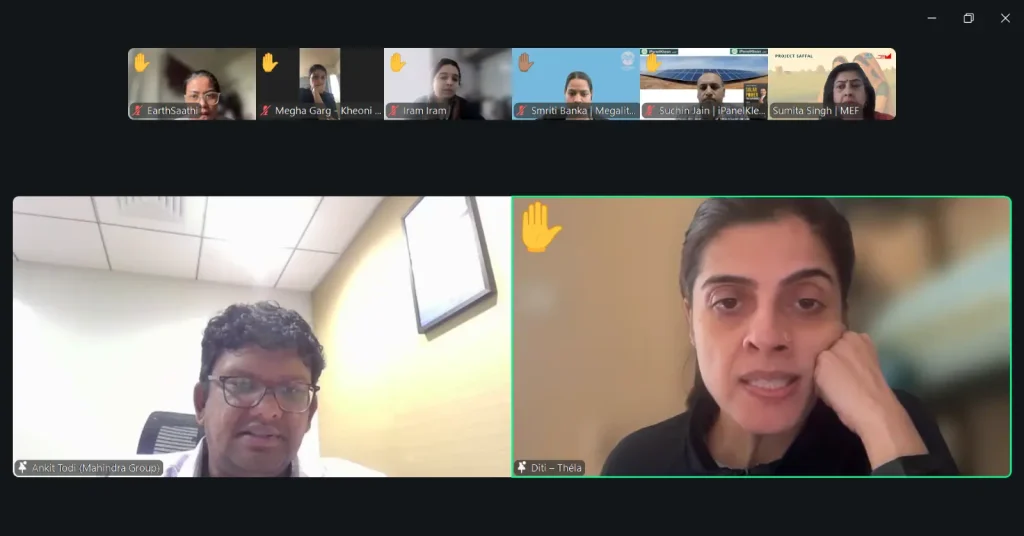
For many climate startups, pilot projects represent the first major bridge between innovation and commercial trust. Yet corporates often evaluate startups through a very different lens – one focused on operational compatibility, risk reduction, measurable outcomes, and scalability potential.
The session encouraged founders to rethink pilots not as temporary experiments, but as strategic relationship-building opportunities.
Founders were advised to think carefully about:
- how success would be measured,
- how reporting would be managed,
- how stakeholders inside partner organizations would be engaged,
- and how pilots could evolve into longer-term partnerships.
Taken together, these sessions highlighted an important reality for climate entrepreneurs:
Building a strong solution is only the beginning. Long-term success depends on whether that solution can integrate into markets, systems, and institutions effectively.
Building Trust Around Climate Innovation
As the mentorship series moved toward its conclusion, the conversations increasingly focused on trust – one of the most important but often invisible elements of startup growth.
For climate startups operating in sectors like agriculture, waste, energy, mobility, and manufacturing, trust is built not only through impact claims, but through operational maturity, governance, compliance, and communication.
This became a key focus during Mathews Verghese’s session on intellectual property, legal preparedness, and regulatory readiness. Mathews is a Partner at Fox Mandal & Associates LLP and has over 18 years of experience in the field of Intellectual Property Rights
The discussion challenged the common tendency among early-stage founders to postpone legal structuring and governance decisions until later stages of growth. Instead, founders were encouraged to see legal preparedness as an essential part of business readiness itself.
The session explored how strong governance structures, clear agreements, regulatory awareness, and protected intellectual property can strengthen investor confidence, reduce operational risks, and create more stable foundations for scale.
Alongside operational trust, the series also explored the importance of narrative trust.
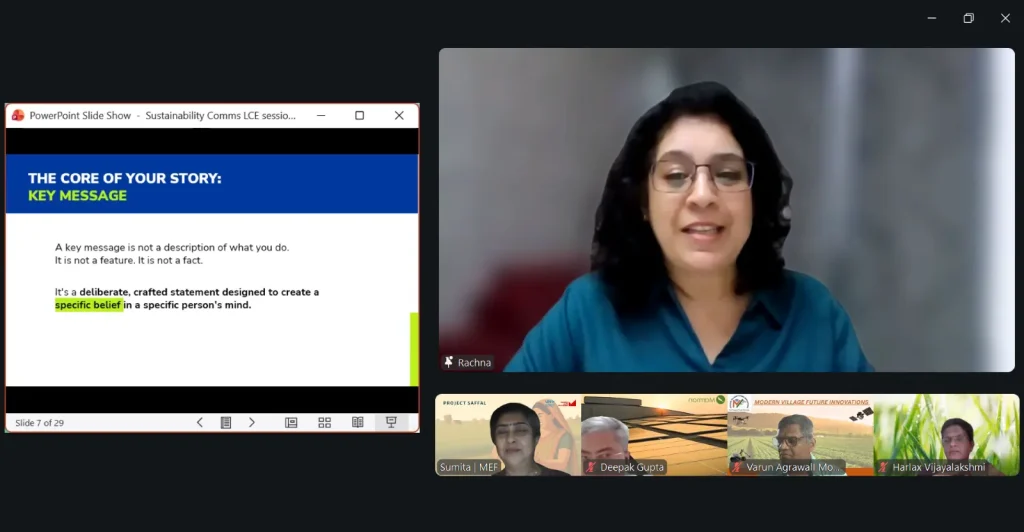
In the final mentor session of this series, Rachna Sharma – Founder & CEO of Climate Ready Leaders – addressed one of the most persistent challenges climate founders face: communicating complex solutions in ways that people can actually understand, relate to, and act upon.
Many climate ventures work on deeply technical problems. But if investors, customers, policymakers, or communities struggle to grasp the value of the solution, adoption becomes significantly harder.
The session encouraged founders to simplify without oversimplifying — to communicate impact through relatable outcomes, clear messaging, and audience-specific storytelling.
A particularly important insight from the discussion was that communication is not separate from growth strategy.
Clarity itself can become a driver of trust, adoption, and scale.
Together, these final sessions reinforced that successful climate entrepreneurship requires both operational credibility and the ability to communicate purpose with clarity and confidence.
Wrapping Up the Startup Mentorship Series
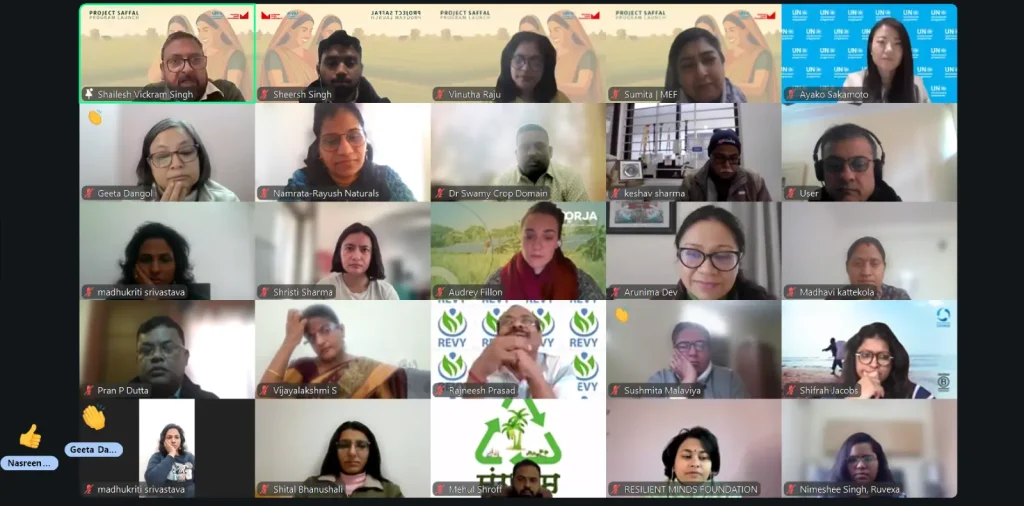
With these sessions, Project SAFFAL’s Startup Mentorship Series concluded after twenty-two conversations spanning fundraising, product development, partnerships, governance, commercialization, communication, and ecosystem-building.
While each session explored a different dimension of entrepreneurship, together they reflected the broader realities of building climate ventures in South Asia – a region where founders must often navigate fragmented markets, evolving regulations, financing gaps, and complex adoption environments simultaneously.
The mentorship series was designed not only to support startups individually, but to strengthen the broader ecosystem around climate innovation.
And across every conversation, one idea remained consistent:
Climate innovation does not scale through technology alone. It scales through ecosystems of trust, collaboration, resilience, and long-term support.
As Project SAFFAL continues supporting women-led climate enterprises across South Asia, these conversations form part of a larger effort to help founders move from ideas to implementation, from purpose to proof, and from local innovation to scalable climate impact.
Join SAFFAL
The Climate Finance Catalyst for South Asia
Apply as an Impact Philanthropist, Donor, Startup, SME, Climate Expert, or Institution. Mobilize climate capital into the right sectors.