Beyond Startups: Building the Future of Climate Innovation in South Asia

Sumita Singh
May 14, 2026

South Asia stands at a critical intersection. It is one of the most climate-vulnerable regions in the world, facing rising temperatures, extreme weather events, and deepening socio-economic risks. At the same time, it is home to a rapidly growing innovation ecosystem, with the potential to develop solutions that are not only locally relevant, but globally significant.
Yet the challenge is not a lack of ideas. As explored in “The Climate Finance Gap in South Asia – and the Case for Women-Led Innovation”, the real constraint lies in the systems that enable ideas to become scalable, investment-ready solutions.
This is where Project SAFFAL’s vision extends far beyond startups.
From Supporting Startups to Building Systems
Most programs in the climate ecosystem focus on individual founders or short-term cohorts. While these interventions are valuable, they often operate in isolation, without addressing the deeper structural gaps that limit long-term impact.
As outlined in “Project SAFFAL: Building a Pipeline of Investment-Ready Climate Startups”, SAFFAL is designed not just as a program, but as a structured pathway for climate ventures to move from early-stage ideas to investment readiness.
This shift – from supporting startups to building systems – is critical.
Because climate innovation is not a one-time outcome. It is a continuous process, requiring alignment across capital, capability, and community.
Bridging the Climate Innovation Gap
South Asia’s climate challenge is matched by a significant financing gap.
Many early-stage climate startups struggle to move beyond pilot stages due to limited access to risk capital and market validation. This creates a “missing middle”, where promising solutions exist, but lack the support needed to scale.
Through its focus on investment readiness and structured support, SAFFAL is actively working to close this gap, an approach further reinforced through its deep mentorship model, as detailed in “From Idea to Investment-Ready: How Project SAFFAL is Building the Next Generation of Climate Founders”.
In doing so, it contributes not just to startup success, but to the broader efficiency of climate finance deployment in the region.
Building an Ecosystem, Not Just a Cohort
Climate innovation does not happen in silos. It requires collaboration across:
- Founders
- Mentors
- Investors
- Corporates
- Ecosystem Partners
- Research Institutions
However, across South Asia, these efforts often remain fragmented.
Project SAFFAL’s long-term vision is to create a connected ecosystem, where:
- Founders gain access to domain and market expertise
- Investors engage earlier in the innovation lifecycle
- Knowledge and support flows across sectors and geographies
By institutionalizing these connections, SAFFAL moves beyond one-off interactions to build lasting networks of collaboration.
Centring Inclusion in Climate Innovation
A defining element of SAFFAL’s vision is its focus on women-led climate innovation, a theme that sits at the core of its broader mission.
As highlighted in earlier discussions on the climate finance gap, supporting women entrepreneurs is not just about inclusion; it is about unlocking high-potential solutions that are often overlooked by traditional funding systems.
Because inclusive ecosystems are not just fairer. They are more effective in solving complex, real-world problems.
From Regional Solutions to Global Relevance
The challenges faced by South Asia – heat stress, water scarcity, agricultural vulnerability, urban resilience – are increasingly global.
This creates a powerful opportunity.
Solutions developed in South Asia have the potential to:
- Scale across the Global South
- Inform global climate strategies
- Address similar challenges in other emerging markets
However, realizing this potential requires more than innovation. It requires structured pathways to scale – including access to capital, markets, and cross-border partnerships.
Project SAFFAL is laying the groundwork for this transition – from local innovation to global impact.
Connecting Innovation to Capital: The Role of Global Platforms
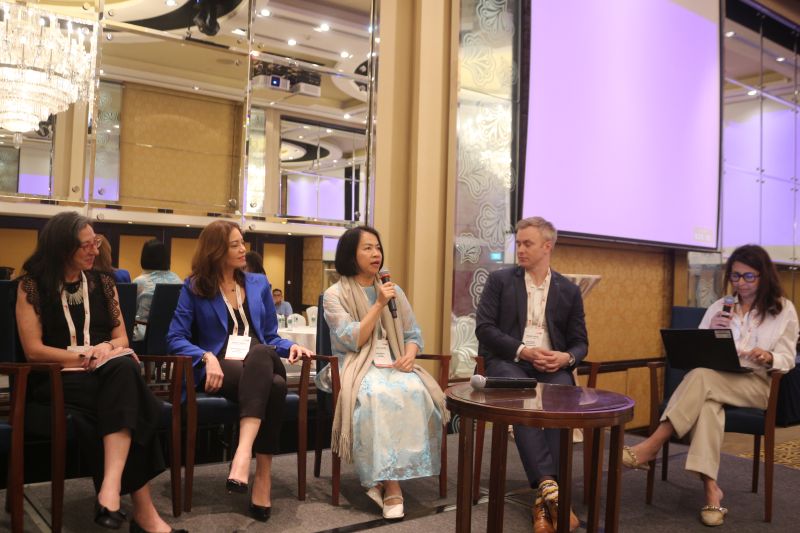
A critical part of SAFFAL’s long-term vision is ensuring that innovation does not remain disconnected from capital.
Events such as the SAFFAL Investor & Donor Summit in Singapore play a pivotal role in this journey – bringing together investors, donors, and ecosystem stakeholders to engage directly with the emerging pipeline of climate startups.
These convenings are not just showcases. They are strategic bridges:
- Aligning capital with validated, investment-ready opportunities
- Enabling blended finance conversations
- Creating pathways for long-term partnerships
By integrating such global platforms into its ecosystem, Project SAFFAL ensures that the journey from innovation to investment is intentional, visible, and scalable.
Shaping the Future of Climate Innovation
Ultimately, the vision of Project SAFFAL is not defined by the number of startups it supports.
It is defined by the system it helps build:
- A pipeline of investment-ready climate ventures
- A network of aligned ecosystem stakeholders
- A platform for inclusive and scalable innovation
In a region where climate risks are intensifying, and resources remain constrained, such systems are not optional. They are essential.
Because solving the climate crisis in South Asia will not come from isolated breakthroughs. It will come from consistent, collective, and well-supported innovation – at scale.
And that is the future Project SAFFAL is working to build.
Join SAFFAL
The Climate Finance Catalyst for South Asia
Apply as an Impact Philanthropist, Donor, Startup, SME, Climate Expert, or Institution. Mobilize climate capital into the right sectors.