The New Face of Waste Innovation in South Asia

Sumita Singh
May 27, 2026
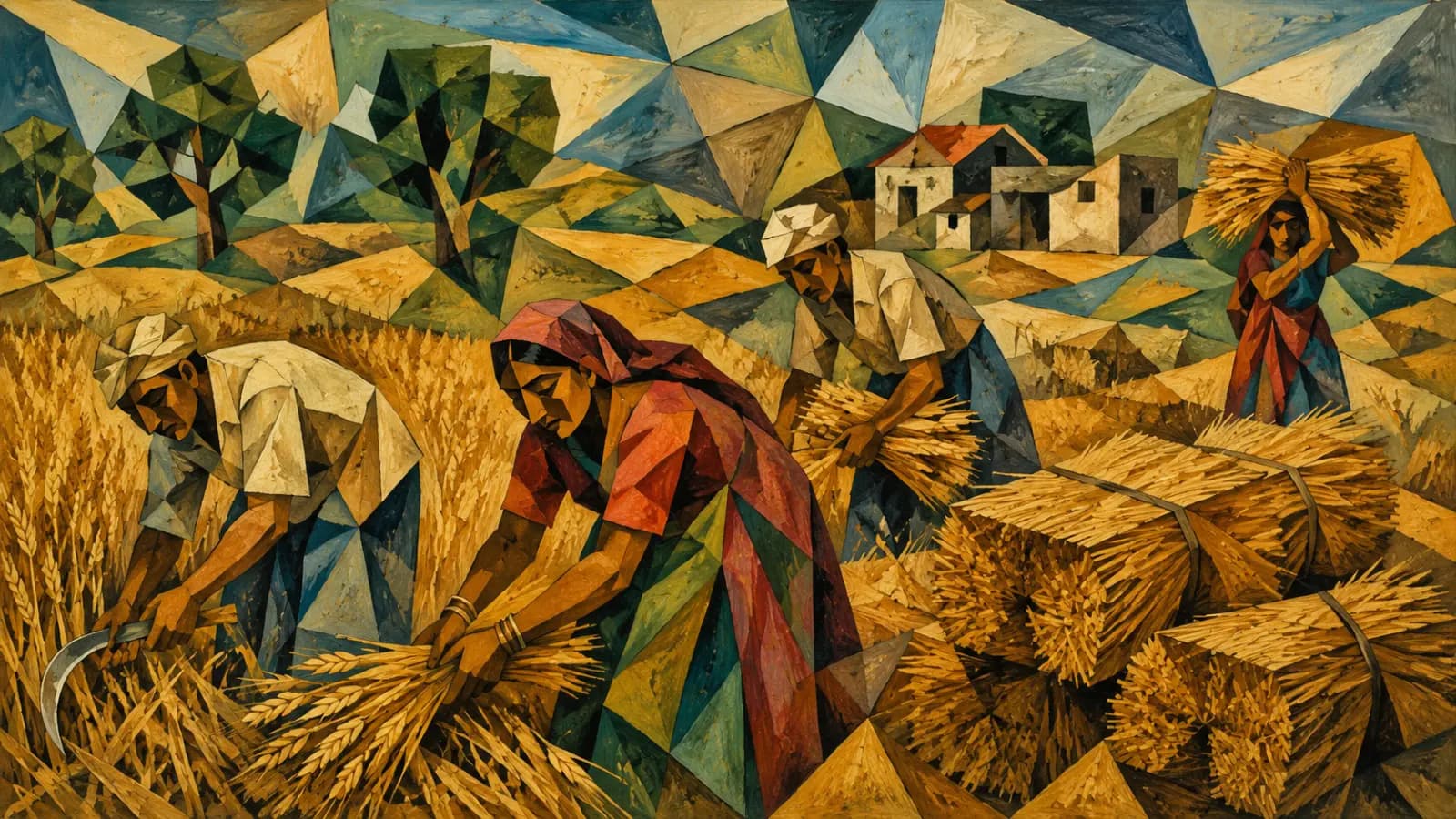
For years, the conversation around waste management in South Asia was framed largely as an urban sanitation problem. Overflowing landfills. Plastic pollution. Municipal collection systems. Informal waste pickers. Recycling infrastructure.
But a quieter and potentially more important transition is now beginning to emerge across the region. Waste is increasingly being treated not merely as something to dispose of, but as a productive economic resource.
The scale of the opportunity is substantial. India alone generates roughly 500 million tonnes of crop residue annually, much of which remains underutilized or is openly burned, despite its potential use.
However, a new generation of climate enterprises is beginning to reimagine agricultural residue, biomass, organic waste, livestock byproducts, and low-value material streams as inputs for energy generation, soil restoration, decentralized manufacturing, and rural livelihoods.
Many of these trends are increasingly visible across the women-led climate ventures participating in Project SAFFAL, offering a glimpse into how circular economy innovation is evolving across the region.
Viewed individually, many of these ventures appear highly localized.
Some climate enterprises in eastern India are converting paddy straw into biochar, specialty chemicals, and other high-value products that create alternatives to open-field burning. In Nepal, women-led ventures are transforming food and organic waste into compost and protein-rich animal feed through circular farming systems. Elsewhere, entrepreneurs are helping farmers monetize crop residue through decentralized collection and processing networks that connect agricultural waste to energy and industrial markets.
But taken together, they reveal something much larger. The circular economy in South Asia is becoming increasingly rural in character.
And that shift may fundamentally reshape how climate adaptation, agricultural resilience, and rural economic development intersect in the coming decade.
Waste as Rural Infrastructure
One of the clearest patterns emerging across South Asia’s climate innovation ecosystem is that waste is increasingly being treated as infrastructure rather than a disposal challenge.
Historically, agricultural waste across the region was often viewed as a low-value byproduct of farming activity – something to burn, dump, or remove as cheaply as possible. Crop residue burning across parts of India became normalized not because farmers preferred it, but because economically viable alternatives were limited.
That assumption is now beginning to change.
A growing number of climate enterprises are repositioning agricultural residue, biomass, food waste, livestock byproducts, and other low-value material streams as productive economic assets. These materials are being transformed into biochar, compost, bio-inputs, alternative materials, animal feed, decentralized energy solutions, and other value-added products.
Importantly, these are not simply environmental interventions. They are economic interventions.
For many rural communities, the value proposition is practical and immediate: additional income streams, lower input costs, improved soil health, greater resource efficiency, and reduced exposure to climate-related risks. Hence, rather than asking communities to adopt sustainability measures for environmental reasons alone, many climate enterprises are building models that strengthen economic resilience while delivering environmental outcomes.
This shift is particularly significant because South Asia’s circular economy is evolving differently from many global narratives. Much of the international conversation around circularity has focused on urban recycling systems, consumer packaging, industrial reuse, and municipal waste management. Across South Asia, however, circularity is increasingly emerging from rural and agricultural systems.
Large portions of the region’s population continue to depend on agriculture, while agricultural residue and biomass remain vastly underutilized resources. This creates opportunities to build circular systems around biological and agricultural cycles rather than consumer waste streams alone.
As a result, traditional sector boundaries are beginning to blur.
A venture converting crop residue into biochar is simultaneously participating in waste management, agriculture, carbon removal, and soil restoration. A decentralized biomass platform operates across waste recovery, renewable energy, and farmer livelihoods. A circular farming enterprise that converts food waste into compost and animal feed sits at the intersection of agriculture, waste management, food production, and local employment.
Viewed through conventional industry categories, these businesses can be difficult to classify. But that may be precisely the point.
The climate challenges facing South Asia are deeply interconnected, and the solutions being developed by climate entrepreneurs increasingly reflect that reality. Waste management is no longer functioning as a standalone sector. Instead, it is becoming a connecting layer that links agriculture, energy systems, climate adaptation, livelihoods, and resource recovery into integrated rural economies.
This convergence matters because rural vulnerability rarely stems from a single challenge. Declining soil health, rising input costs, weak market access, waste accumulation, energy insecurity, and climate variability often reinforce one another. Many emerging climate enterprises are responding by building layered systems designed to address multiple challenges simultaneously.
The future of South Asia’s circular economy may be shaped less by urban recycling systems and more by rural enterprises transforming waste into economic value.
A Window into Emerging Climate Innovation
These patterns are reflected across the portfolio of ventures supported through Project SAFFAL, a South Asia-focused initiative that supports women climate founders working across sectors including sustainable agriculture, waste management, renewable energy, energy efficiency, carbon removal, and circular economy systems.
Among the ventures participating in the current cohort, about 58 enterprises are building solutions related to waste management and circularity – ranging from agricultural residue utilization and biomass recovery to composting, alternative materials, resource efficiency, and decentralized recycling models. Viewed collectively, they offer a unique window into how climate innovation is evolving across South Asia’s rural and emerging economies.
While these enterprises operate across different geographies and waste streams, a common pattern is emerging: founders are increasingly designing circular systems that combine environmental outcomes with livelihood stability. Collectively, they provide a valuable lens into how climate innovation is evolving beyond traditional urban and industrial models.
Circularity is Creating New Rural Value Chains
One of the most interesting developments emerging from South Asia’s climate innovation ecosystem is that circularity is no longer being confined to waste management. Instead, it is beginning to create entirely new value chains.
Traditionally, agricultural residue, organic waste, and biomass occupied the margins of rural economies. They were often treated as low-value byproducts with limited commercial significance. Once the primary crop had been harvested or processed, the remaining material was frequently burned, discarded, or left unused.
Today, a different model is beginning to emerge.
The shift is occurring against a backdrop of significant untapped material flows. According to UNEP, South Asia generates approximately 334 million tonnes of waste are generated annually, of which around 174 million tonnes (57%) is organic waste. Much of this material remains outside formal recovery systems, creating opportunities for entrepreneurs to build circular businesses around resource recovery, composting, biomass utilization, and alternative materials.
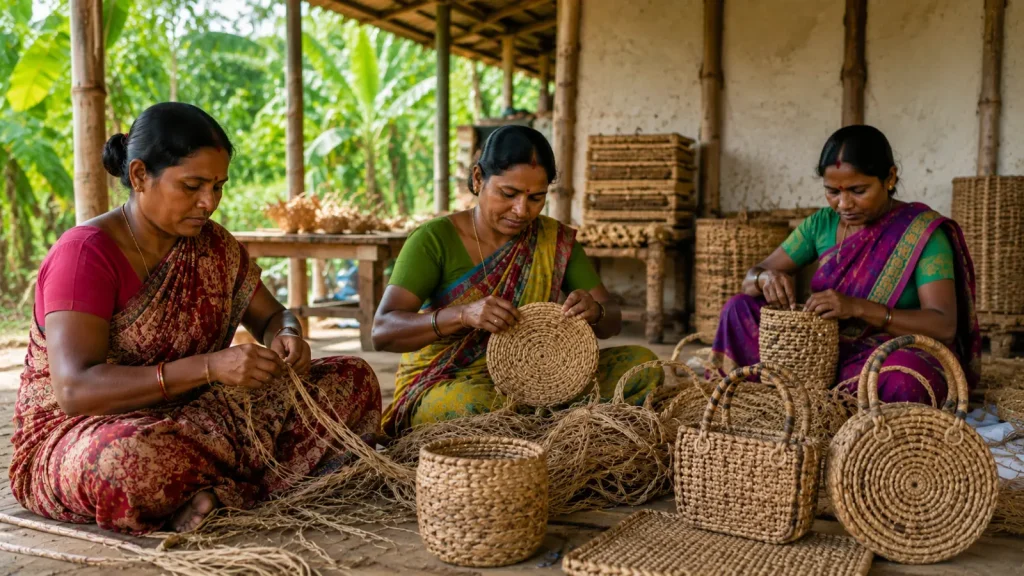
Among the ventures participating in Project SAFFAL, an Odisha-based women-led enterprise is transforming the invasive water hyacinth weed into plant-based sanitary products, turning an environmental challenge into a source of value. In Nepal, banana stem waste that would otherwise be discarded is being converted into compostable menstrual products and fibre-based materials. In Bangladesh, entrepreneurs are repurposing agricultural materials such as mature sponge gourds into alternatives to plastic-based consumer products.
This way, climate enterprises across South Asia are finding ways to transform these underutilized materials into economic inputs that can support new products, services, and local enterprises. Agricultural residue is being converted into biochar and soil amendments. Organic waste is feeding composting systems that support cultivation and food production. Biomass is finding applications in decentralized energy and resource recovery systems.
What is changing is not simply the treatment of waste, but the flow of value itself.
Materials that once exited the rural economy as waste are now being retained, processed, and repurposed within local systems. This creates opportunities for farmers, community enterprises, processors, and local entrepreneurs to participate in new economic activities built around resource recovery and reuse.
The implications extend beyond environmental benefits.
In many cases, these circular models create additional income streams, strengthen local supply chains, and reduce dependence on costly external inputs. Rather than relying solely on extracting value from primary agricultural production, rural communities are beginning to capture value from what was previously overlooked.
This is particularly significant in climate-vulnerable regions where economic resilience often depends on diversification. Every additional revenue stream, every reduction in input costs, and every new enterprise opportunity can strengthen a community’s ability to absorb climate-related shocks.
Viewed through this lens, circularity becomes more than a sustainability strategy. It becomes a mechanism for rural economic development.
And as these value chains expand, another pattern becomes visible: technology is increasingly being deployed not to replace people or centralize production, but to make these distributed systems more efficient, reliable, and economically viable.
Technology is Being Used Differently Here
Building circular systems is not only about recovering waste. It is also about making waste streams visible, measurable, and economically usable. This is where technology is beginning to play a role.
Many of the circular economy models emerging across South Asia depend on coordinating complex flows of materials, information, and value. Agricultural residue must be collected, processed, and linked to downstream markets. Organic waste must be converted into products with consistent quality and predictable outcomes. Biomass must move through decentralized systems efficiently enough to remain commercially viable.
Technology is helping solve these practical challenges.
In many global climate-tech narratives, innovation is often associated with automation, software platforms, or highly centralized technological systems. But many climate enterprises across South Asia appear to be using technology differently: not primarily to replace labour, but to reduce uncertainty.
Among SAFFAL-supported ventures, AI-powered sorting systems, digital biomass aggregation platforms, and semi-automated waste-processing facilities are helping reduce contamination, improve material recovery, and connect waste streams with downstream markets. In Nepal, semi-automated waste processing facilities are being combined with AI-enabled systems to create viable markets for low-value plastics. Others are using digital platforms to coordinate crop-residue collection networks and connect farmers with buyers in biomass, energy, and carbon markets.
The emphasis is often less about technological sophistication for its own sake and more about practical economic outcomes:
- reducing spoilage,
- improving reliability,
- lowering costs,
- improving input efficiency, and
- stabilizing fragile livelihoods.
The next wave of climate innovation may emerge not from industrial parks, but from rural value chains.
A Different Model of Climate Innovation is Emerging
Taken together, these enterprises reveal something larger than isolated startup activity. They reveal an emerging philosophy of climate innovation in South Asia, where –
- waste becomes productive infrastructure,
- circularity becomes localized,
- climate adaptation becomes tied to livelihoods, and
- rural economies become central to the transition.
This matters because much of the global climate conversation still tends to focus heavily on large infrastructure transitions, industrial decarbonization, and centralized energy systems. Those transitions are important. But they are not the entire story.
Across South Asia, climate adaptation may depend more heavily on smaller, decentralized, locally embedded enterprises operating directly inside vulnerable communities – from rural biomass processing networks in India to women-led circular manufacturing ventures in Nepal and reusable packaging systems emerging in Bangladesh.
And many of those enterprises are being built by founders working far outside traditional venture ecosystems.
That may ultimately become one of the most important insights emerging from platforms such as Project SAFFAL.
Not simply that women-led climate enterprises are participating in the climate transition, but that they are revealing entirely different models of how climate innovation itself may evolve across emerging markets.
Models shaped less by abstraction and more by lived economic realities.
What These Patterns May Signal for the Future
The broader implication is that waste management in South Asia may no longer remain a standalone sector. It is now converging with:
- agriculture,
- energy systems,
- climate adaptation,
- livelihood resilience, and
- decentralized rural development.
That convergence may become one of the defining structural shifts in the region’s climate economy. Because once waste begins generating value, it changes how entire systems behave.
Farm residue becomes income.
Organic waste becomes soil productivity.
Biomass becomes energy.
Circularity becomes employment.
And climate adaptation becomes economically actionable.
The examples may look very different on the surface – plastic recovery networks in Nepal, crop-residue platforms in India, biodegradable consumer products in Bangladesh – but they are responding to the same underlying challenge: how to keep resources circulating within local economies rather than allowing them to become waste.
The startups emerging across South Asia today may still appear fragmented, early-stage, and localized.
But collectively, they may be pointing toward something much larger: a future in which the circular economy is not built only through urban recycling systems or industrial sustainability targets, but through the redesign of rural economic systems themselves.
And across South Asia, many of the entrepreneurs participating in initiatives such as Project SAFFAL appear to be building exactly that future – one where waste is no longer viewed as a burden to be managed, but as an asset capable of generating livelihoods, resilience, and climate impact.
Join SAFFAL
The Climate Finance Catalyst for South Asia
Apply as an Impact Philanthropist, Donor, Startup, SME, Climate Expert, or Institution. Mobilize climate capital into the right sectors.