Climate Insight
The $3 Million "Missing Middle": Why the Future of Climate Innovation is Female (and South Asian)

SAFFAL Team
March 27, 2026
Introduction: The Climate Finance Paradox
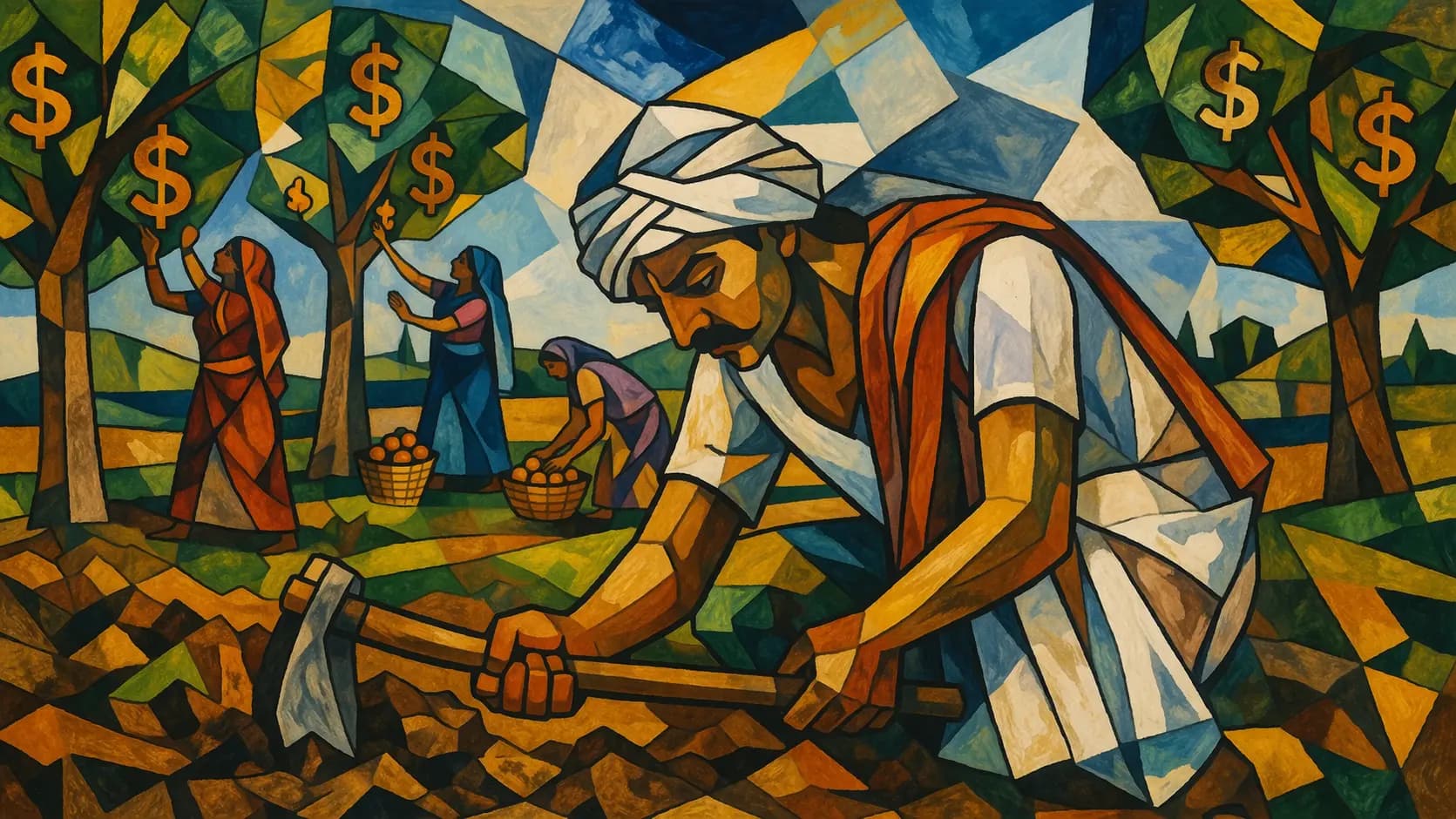
In the global theater of climate action, we are witnessing a profound and costly irony. At the macro level, billions of dollars in "green capital" are pledged annually by international bodies and sovereign funds. Yet, at the micro level, the very engines of innovation—early-stage small and medium-sized enterprises (SMEs)—are starving in a "funding desert." We are essentially pouring oceans of capital into a funnel that is blocked at its narrowest point.
This disconnect is most visible in South Asia, a region defined by high climate vulnerability and a massive, untapped market of 1.7 billion people. While the macro pledges are impressive, they rarely reach the women-led green ventures that possess the local context and technical solutions required for true decarbonization. These businesses find themselves trapped: too large for micro-grants, yet too "risky" for institutional ticket sizes.
Project SAFFAL (South Asia Finance Facility for Acceleration and Leverage) is a disruptive intervention designed to break this bottleneck. By targeting women-led SMEs in clean energy and low-carbon tech, SAFFAL is not merely an accelerator; it is a financial facility engineered to resolve the "infrastructure logic" failure of current climate finance.
Below, we explore why bridging this gap is the single most important lever for institutionalizing the South Asian green economy.
1. The Invisible Barrier: Solving the "Missing Middle" Gap
In the current financing landscape, a systemic "Investible Gap" exists specifically between $2 million and $3 million. SMEs in this bracket are the "Missing Middle." They have moved beyond the proof-of-concept stage but have not yet reached the scale required by major Development Finance Institutions (DFIs) or commercial lenders.
The problem, however, is not just a lack of capital; it is a failure of capital formation friction. Capital providers hesitate because "risk is unstructured," and for many, the transaction costs of structuring a $2 million ticket are identical to those of a $20 million ticket. This makes small-ticket deals "un-economic" for traditional institutions. The lack of structure is evidenced by:
- Weak Governance: A lack of institutional-grade reporting that scares away downstream debt.
- Asymmetrical Risk Pricing: Without "underwriting-ready" financials, lenders cannot accurately price the risk, leading to inaccessible debt.
- Fragmented Graduation: A dependence on one-off grants that offer no pathway to commercial capital, leaving businesses perpetually "grant-dependent" rather than "investment-ready."
2. Beyond Silicon Valley: Adapting the Infrastructure Logic
We must pivot from the Silicon Valley "power law" obsession to a model of distributed sustainability. The traditional Venture Capital (VC) model—exemplified by Y Combinator—is designed for high-exit, software-based returns. Climate impact is asset-intensive and revenue-stability driven. We should not copy the VC infrastructure; we must adapt its logic to contain risk rather than seek exponential risk.
| Feature | Venture Capital Equity | Climate SME Impact |
|---|---|---|
| Upside | Significant Equity Upside | Limited Financial Upside |
| Returns | Power Law Returns | Distributed Sustainability |
| Key Driver | Exit-driven | Revenue Stability Driven |
| Risk Profile | Risk rewarded exponentially | Risk must be contained |
By shifting the focus to revenue stability and risk containment, we create a structure where climate SMEs can thrive as profitable, long-term assets rather than speculative moonshots.
3. Manufacturing Investability: The SAFFAL "Catalytic Engine"
SAFFAL serves as an "upstream investability engine." Think of it as a specialized factory that takes the "raw material" of localized green innovation and processes it into "institutional-grade" assets. The facility targets an initial 6–10 million in blended finance to kickstart this pipeline.
As the strategic framework dictates:
"The idea is clear, use catalytic capital to reduce risk, crowd in private financing, and build a sustainable pipeline of investable women-led climate businesses."
Phase 1: The Centralized Engine Components
- Centralized Investment Committee: Standardizes the vetting process, ensuring that trust is shifted from individual businesses to a credible platform.
- Catalytic Capital Deployment: Approximately $150,000 is deployed per SME to absorb the "first loss" and reduce the risk for downstream private investors.
- 1.1x–1.3x Repayment Caps: These caps instill capital discipline while preserving the SME's cash flow, ensuring the business is not strangled by the cost of capital as it scales.
4. The "Returnable Grant" Revolution
The cornerstone of the SAFFAL model is the transition from "one-and-done" donor grants to Returnable Grants. This is a fundamental shift in recycling velocity. Traditional donor grants are spent and gone; SAFFAL’s returnable grants are deployed and recovered on 3–5 year cycles.
This creates a "self-reinforcing recycling engine" or an evergreen pool of capital. Crucially, this model removes donor vetoes at the deal level. By establishing pre-defined governance standards up front, the facility can move with the speed of a private fund rather than the bureaucracy of a traditional donor agency. This agility allows for the "institutionalization of the pipeline," making it far more sustainable than fragmented, non-recyclable funding models.
5. South Asia: A Regional Powerhouse of Resilience
With a combined addressable market of 1.7+ billion people, South Asia is not just a region of risk—it is a region of immense climate opportunity. SAFFAL leverages the specific strengths of five focus countries:
- India: A massive market focusing on Tier 2/3 cities and underserved regions to drive decentralized green growth.
- Sri Lanka: A hub for circular economy potential and agricultural innovation amidst post-crisis economic recovery.
- Nepal: A leader in community-based enterprise models that offer high resilience and social impact.
- Bhutan: A carbon-negative nation offering unique opportunities in nature-based economies and high-sustainability tourism.
- Bangladesh: A global hub for resilience innovation with a deeply rooted tradition of women’s entrepreneurship.
6. The "Women-Led" Innovation Depth
The results of SAFFAL’s regional open call shattered the myth that there isn't enough "top-of-funnel" talent. The facility received an overwhelming response of 500+ applications, proving a massive untapped potential. Because of the "sheer quality and diversity" of the applicants, the initial cohort was expanded from 100 to 160 enterprises.
These innovators are operating across six distinct, high-impact sectors:
- Renewable Energy
- Energy Efficiency
- Waste Management
- Fuel Switching
- Agri-tech
- Carbon Removal
By focusing on women-led SMEs, SAFFAL captures a "double bottom line": driving decarbonization while simultaneously closing the gender credit gap.
Conclusion: A Five-Year Vision for a Greener Horizon
The five-year vision for SAFFAL is to deploy 35–50 million in catalytic capital, structuring a cohort of 150–250 climate SMEs into a permanent, institutional-grade dataset. We are building the foundational layer that will allow DFIs and commercial banks to finally enter the South Asian SME market at scale.
We must ask ourselves: if we continue to fund only the "top" of the pyramid, who will build the infrastructure below? By injecting institutional-grade governance at the SME level, we are not just helping individual businesses; we are creating the "standard documentation" for a new asset class. The future of climate innovation is already here—it is female, it is South Asian, and it is ready for capital. The question is, are we structured enough to provide it?
Join SAFFAL
The Climate Finance Catalyst for South Asia
Apply to SAFFAL as Impact Philanthropist, Donor, Startup, SME, Climate Expert, or Institution. Mobilize climate capital into the right sectors and build the technology that changes real climate outcomes.
Apply Now