Khetipati Organics: Building Climate-Resilient Agriculture and Rural Livelihoods in Nepal

Sumita Singh
July 23, 2026
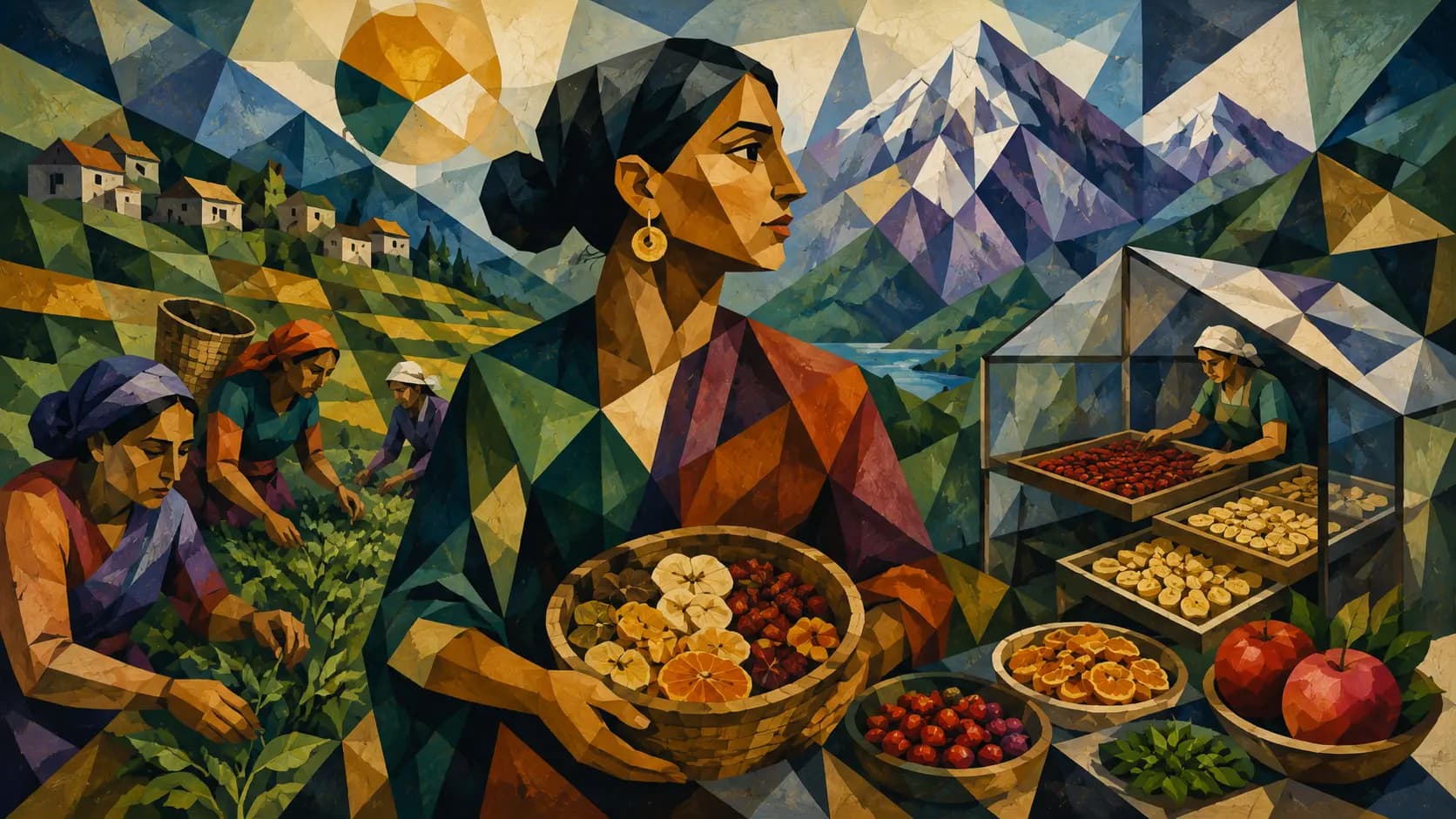

Across South Asia, climate change is no longer a future concern; it is a present-day challenge affecting millions of livelihoods. Rising temperatures, erratic rainfall, extreme weather events, and changing growing seasons are placing increasing pressure on agricultural systems that support a significant share of the region’s population. According to the World Meteorological Organization’s (WMO) State of the Climate in Asia 2024 Report, Asia is warming nearly twice as fast as the global average, accelerating the frequency and intensity of climate-related shocks that threaten food security, rural livelihoods, and economic stability across the region.
For smallholder farmers living in mountainous and remote regions, these climate risks are often compounded by difficult terrain, weak market access, inadequate storage infrastructure, and high post-harvest losses. As policymakers, investors, and development organizations seek pathways toward more resilient food systems, a new generation of climate enterprises is emerging with solutions that combine environmental sustainability with economic opportunity.
One such enterprise is Khetipati Organics, a women-led sustainable agriculture company from Nepal and one of the climate enterprises supported through Project SAFFAL (South Asia Finance Facility for Acceleration and Leverage). By reducing food loss, strengthening farmer livelihoods, and creating value-added products from locally sourced produce, Khetipati Organics is demonstrating how climate innovation can emerge from some of the most challenging agricultural landscapes in the Himalayas.
About the Founder: A Vision for Sustainable Agriculture
The story of Khetipati Organics begins with a deliberate choice.
After completing her education at the London School of Economics, Co-founder and CEO Prakriti Gautam faced a path familiar to many talented graduates: pursue opportunities abroad or return home to build something meaningful. She chose the latter.
Prakriti returned to Nepal with a vision of creating a value-added, climate-resilient agribusiness that could generate opportunities for rural farming communities while addressing inefficiencies across agricultural value chains.
Today, she manages relationships across a vast rural footprint spanning more than 1000 farmers across 7 districts of Nepal, working closely with producer communities to improve market access, strengthen supply chains, and create sustainable economic opportunities.
Along the way, she has earned international recognition. In 2026, Prakriti was selected as a fellow of the Cartier Women’s Initiative, one of the world’s most respected programs supporting women entrepreneurs creating social and environmental impact. She is also a fellow of Vital Voices Global Partnership, a globally recognized network that invests in women leaders addressing major economic and societal challenges.
Building a Climate-Resilient Food System from the Himalayas

Khetipati Organics is a women-led agro-processing social enterprise committed to transforming agricultural value chains across Nepal’s hills and Himalayan regions.
The company specializes in ethically sourced and sustainably produced dehydrated fruits, spices, herbs, frozen foods, and ready-to-eat products. By combining sustainable sourcing with value-added processing, it helps farmers capture greater value from their produce while reducing losses that occur after harvest.
What makes the enterprise particularly relevant in the climate context is its focus on building resilience where it is needed most – among smallholder farmers living in remote, climate-vulnerable regions.
Across the Himalayan belt, more than 3 million households depend on marginal agricultural cultivation and face significant barriers to market access while being among the most exposed to climate-related risks.
Khetipati Organics was founded with the belief that climate resilience and rural prosperity can be advanced together.
“The future of climate-smart agriculture will be shaped not only by what farmers grow, but by how much value they can retain after harvest.”
The Problem: When Climate Change and Food Loss Collide
For many farming communities in Nepal’s hills, producing crops is only half the challenge.
Getting those crops to market before they spoil is often equally difficult.
Farmers frequently face:
- Unpredictable weather patterns linked to climate change.
- Difficult geography and transportation constraints.
- Limited market linkages.
- Short harvest seasons that create temporary oversupply.
- Significant post-harvest losses.
These challenges create a cycle of economic vulnerability. Valuable produce is often lost before reaching consumers, reducing farmer incomes and discouraging long-term investment in agriculture. In many communities, the result has been increased migration and occupational shifts away from farming.
The consequences extend beyond individual farmers. Food that is grown but never consumed represents wasted land, water, energy, and labour – making food loss both an economic and environmental challenge.
The Solution: Creating Value Across the Agricultural Value Chain

Khetipati Organics addresses these challenges through a straightforward but effective model: source directly from farmers, processing (add value) near production areas, and connect products to larger markets.
Direct Sourcing and Fair Market Access: The company works directly with smallholder and organic farmers, sourcing raw materials without relying heavily on intermediaries. This model helps farmers secure fairer prices, improve financial stability, and create stronger incentives for sustainable agricultural practices.
Reducing Post-Harvest Loss: Through contract farming, market linkages, transportation support, and pre- and post-harvest advisory services, Khetipati Organics helps farmers reduce food waste and preserve the value of their produce.
Climate-Friendly Processing Technologies: The enterprise specializes in multiple drying and preservation technologies, including solar drying, heat-pump drying, and freeze-drying. These techniques extend shelf life, reduce waste, and make locally grown produce accessible to wider markets throughout the year.
Global Standard Packaging: Local youth and indigenous women manage the processing lines, converting delicate raw fruits and native flora into shelf-stable powders, fruit snacks and powders, frozen fruits, herbs, spices, and ready-to-eat foods inspired by Himalayan culinary traditions and ready for international distribution.
The Impact: Building Climate Resilience Beyond Agriculture
The impact generated by Khetipati Organics extends well beyond food processing.
The company reports that it has:
- Partnered with more than 2,000 farmers.
- Prevented approximately 200,000 kilograms of post-harvest loss annually.
- Increased participating farmers’ incomes by approximately 35%.
- Built a workforce where 70% of employees are women.
- Ensured that 90% of workers come from marginalized and Indigenous communities.
- Supported the commercialization of more than 10 native and Indigenous produce varieties.
The enterprise also creates employment opportunities for rural women, Indigenous communities, and local youth through its processing operations, helping ensure that more value remains within local economies.
Beyond its on-the-ground impact, Khetipati Organics has emerged as a visible example of how rural climate enterprises can build globally relevant brands while remaining deeply connected to local communities.
“Reducing post-harvest loss is not just a food system challenge; it is a climate resilience opportunity for millions of smallholder farmers across the Himalayas.”
Why Khetipati Organics Matters: Building Climate-Resilient Food Systems

Climate adaptation is often discussed in terms of infrastructure, technology, or policy. Yet some of the most effective climate solutions emerge from strengthening everyday economic systems.
Khetipati Organics demonstrates how reducing food waste, improving market access, and creating value-added agricultural products can simultaneously address multiple climate and development challenges.
Its model contributes to:
- Stronger climate resilience among smallholder farmers.
- More efficient use of agricultural resources.
- Reduced food loss and waste.
- Increased rural incomes.
- Greater participation of women in climate-positive value chains.
- Preservation and commercialization of Indigenous crops and food traditions.
At a time when food systems account for a substantial share of global emissions while remaining highly vulnerable to climate impacts, solutions that reduce crop losses and improve livelihoods are becoming increasingly important. The company addresses 3 core UN Sustainable Development Goals: SDG 2 (Zero Hunger), SDG 8 (Decent Work and Economic Growth), and SDG 12 (Responsible Consumption and Production).
The significance of Khetipati Organics lies not only in the products it produces, but in the system it is helping to build – one where climate resilience and economic opportunity reinforce each other.
What Lies Ahead: Scaling Climate-Resilient Agriculture
Khetipati Organics is now looking to scale its impact beyond its current footprint.
The company plans to strengthen aggregation centres and micro-processing hubs while expanding its model into additional regions of Nepal, Bhutan, and Northeast India.
Going forward, the company’s goals include:
- Partnering with 5,000 smallholder farmers.
- Sourcing 500 tonnes of perishables annually.
- Building a supply chain that is 80% digitally traceable across the Himalayas.
- Prioritizing international standard certifications to seamlessly access new premium health-and-wellness markets across North America and Europe.
These ambitions reflect a broader vision: creating a regional network that can help climate-vulnerable farming communities capture more value from what they grow while reducing waste and strengthening resilience.
Accelerating Climate Innovation Through Project SAFFAL
Khetipati Organics is one of the climate enterprises participating in Project SAFFAL (South Asia Finance Facility for Acceleration and Leverage), a regional initiative designed to strengthen women-led climate enterprises and expand access to climate finance across South Asia.
Led by Massive Earth Foundation in partnership with UN Environment Programme (UNEP) and UN Women, Project SAFFAL supports climate entrepreneurs through mentorship, capacity building, investor readiness support, ecosystem partnerships, and access to financing opportunities.
Orchestrated to support visionary women entrepreneurs and climate entrepreneurs across India, Bangladesh, Sri Lanka, Nepal, and Bhutan, SAFFAL recognizes that many promising climate ventures already possess the innovation and impact needed to address pressing environmental challenges but often face barriers in accessing the networks, knowledge, and capital required to scale.
By supporting enterprises such as Khetipati Organics, Project SAFFAL is helping build a stronger pipeline of investable climate businesses led by women entrepreneurs across South Asia.
As climate challenges continue to intensify across the region, these enterprises are proving that meaningful solutions can emerge from local communities, create economic opportunity, and deliver measurable environmental impact at scale.
Join SAFFAL
The Climate Finance Catalyst for South Asia
Apply as an Impact Philanthropist, Donor, Startup, SME, Climate Expert, or Institution. Mobilize climate capital into the right sectors.