Froots Technologies: Reducing Agricultural Losses with AI-Powered Quality Intelligence

Sumita Singh
July 23, 2026
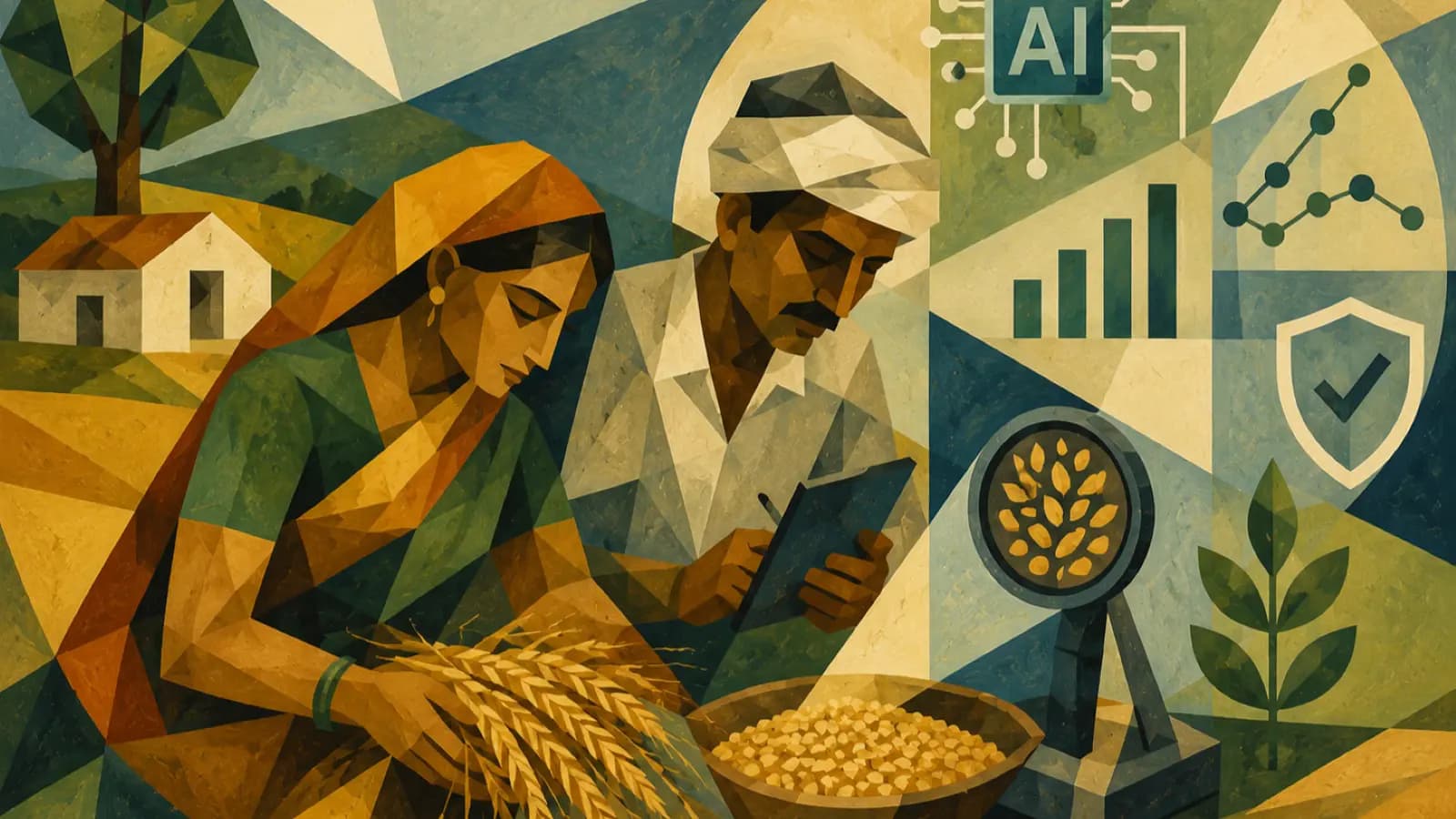

Climate change is reshaping agriculture across the world. Rising temperatures, unpredictable rainfall patterns, changing pest dynamics, and increasing food safety concerns are placing new pressures on agricultural systems. At the same time, governments, businesses, and development institutions are recognizing that food security and climate resilience are deeply interconnected.
In India and across South Asia, the challenge extends well beyond crop production. A significant share of economic potential is lost after harvest because of produce deterioration, contamination risks, inefficient procurement, and inconsistent quality assessment. The result is lower farmer incomes, reduced supply chain efficiency, and limited access to premium domestic and export markets.
According to the 2024 UNEP statistics, 13.2% of food is lost in the supply chain after harvest on farms and before the retail stages; 19% more is wasted at the retail, food service and household levels. Reducing these losses has become an important part of improving food security, farmer incomes, and climate resilience.
As agriculture embraces digital technologies, a new generation of climate enterprises is emerging to address these challenges.
Founded by Shefalika Sharma and Shefali Beri, Froots Technologies Pvt. Ltd. is tackling one of agriculture’s least visible but most expensive problems – quality and compliance rejections or losses. Incubated at IIT Ropar and supported by leading agricultural and innovation institutions, including the Agri-Innovation Hub (AgHub) at Professor Jayashankar Telangana Agricultural University (PJTAU) and AIC Banasthali Vidyapeeth, the company has built AI-powered Quality and Compliance Platform that helps farmers, Farmer Producer Organizations (FPOs), buyers, exporters, etc., make more informed decisions based on consistent crop data at critical control points in the value chain.
Froots is also one of the climate enterprises supported through SAFFAL (South Asia Finance Facility for Acceleration and Leverage).
The Invisible Challenge: Quality Losses Across the Value Chain
Agricultural losses are often associated with weather events, pests, or poor yields. However, a substantial portion of economic loss occurs at harvest and after crops have already been harvested.
According to a study by the ICAR-Central Institute of Post-Harvest Engineering and Technology (CIPHET), commissioned by the Government of India, the annual value of harvest and post-harvest losses of major agricultural produce in India is estimated at ₹92,651 crore, underscoring the need for better storage, grading, testing, and supply chain management.
Variations in moisture levels, fungal contamination, handling damage, storage issues, and inconsistent grading practices can significantly reduce the marketability of produce before it reaches buyers. Many of these defects are not immediately visible, leading to disputes, rejected consignments, lower prices, and increased storage and logistics costs.
The company identifies several recurring challenges across agricultural supply chains, including:
- Quality downgrading and rejection risks
- Manual grading inconsistencies
- Hidden crop damage that emerges later in the value chain
- Compliance challenges for domestic and export markets
- Delays in testing and procurement processes
- Reduced price realization for farmers and producer organizations
These inefficiencies have important climate implications as well. Every rejected batch, every preventable quality loss, and every tonne of produce that fails to reach markets represents wasted land, water, energy, labour, and lost income for farmers.

Building a Digital Quality Footprint for Agriculture
Froots Technologies approaches this challenge through an integrated AI-driven intelligence system that spans the entire agricultural value chain – from farm to buyer. Rather than focusing solely on testing produce at the point of sale, the company seeks to predict, prevent, detect, and manage quality risks throughout the production cycle.
Its flagship platform – AgriQ – combines data science, artificial intelligence, computer vision, and digital procurement tools to create what the company calls a “digital quality footprint” for agricultural produce.
The approach follows four interconnected stages:
Predict: Using crop, weather, and field-level signals, the platform identifies potential post-harvest risks before they become visible problems. This includes forecasting conditions that may contribute to fungal contamination, aflatoxin risks, moisture-related issues, and other quality concerns.
Prevent: The system provides farmers and FPOs with actionable recommendations such as irrigation guidance, drying-window alerts, risk notifications, storage protocols, and other preventive interventions designed to reduce losses before harvest and during handling.
Detect: The AI-powered assessment tools enable objective and rapid evaluation of agricultural commodities, reducing dependence on manual grading and subjective decision-making.
Price: Verified assessment data helps buyers and sellers establish more transparent pricing mechanisms, enabling stronger links between quality and value realization.
Turning AI Into Practical Decisions
One of Froots’ core technologies is Iphy, an AI-powered grain quality analyser that uses computer vision to assess grain quality, detect impurities, and generate objective grading scores within minutes. The results feed directly into the AgriQ platform, enabling faster and more transparent procurement decisions.

Another of Froots’ innovations is AflaPredict, an AI-driven risk prediction platform developed specifically to identify and prevent aflatoxin contamination in peanut and groundnut supply chains. Aflatoxins are among the most serious food safety risks affecting agricultural exports and are a common reason for shipment rejections in international markets.
By combining climate, environmental, crop, and field-level data, AflaPredict helps predict contamination risks before they occur, enabling farmers, aggregators, and exporters to take preventive action. By helping stakeholders intervene before contamination spreads, the platform reduces the risk of rejected export consignments and protects both farmer incomes and buyer confidence.
Beyond crop assessment, AgriQ also digitizes procurement by bringing farmer records, documentation, pricing, order tracking and traceability into a single workflow. Together, these tools help create greater transparency and accountability across agricultural transactions.

Creating Impact on the Ground
Froots Technologies is already demonstrating adoption across multiple agricultural ecosystems.
The company reports that more than 10,000+ farmers have been registered on the AgriQ platform through 6 FPOs, while its IPhy AI-based testing system has been deployed in FPO operations, private seed companies, and training initiatives with government-linked institutions. The company has also undertaken pilots focused on aflatoxin risk prediction and food safety management.
According to the company, its solutions have helped farmers, FPOs, and buyers achieve:
- Improved price realization
- Reduced post-harvest and quality losses
- Better access to premium markets
- Greater traceability and buyer confidence
- Increased procurement volumes among participating FPOs
- Lower rejection rates through more consistent standardized grading
- More efficient procurement processes
Beyond economic gains, these improvements contribute to broader climate resilience objectives by reducing waste, improving resource efficiency, and strengthening the ability of smallholder farmers and producer organizations to participate in more sustainable agricultural markets.
“In climate-smart agriculture, preserving the worth of every harvest is becoming just as important as increasing production.”

Why Smarter Post-Harvest Management Matters
Climate-smart agriculture is often associated with production technologies, irrigation systems, or regenerative farming practices. Yet post-harvest management remains one of the least digitized segments of agricultural value chains.
As climate variability increases, conversations around agriculture are beginning to shift. Success is no longer measured only by how much farmers produce, but also by how much of that produce reaches markets safely, meets increasingly stringent standards, and commands a fair price.
Changing weather patterns are also making it harder to maintain consistent quality standards. Crops are increasingly exposed to heat stress, moisture fluctuations, fungal outbreaks, and contamination risks that can affect marketability long after harvest.
By introducing data-driven insights into agricultural systems, companies like Froots are helping address a critical but often overlooked challenge: ensuring that the income generated on farms is preserved throughout the supply chain.
Better quality assurance strengthens food safety, reduces waste, improves market access, and builds trust across agricultural value chains.
At its core, Froots is helping build trust across agricultural supply chains – giving farmers, buyers, processors, exporters, and ultimately consumers greater confidence in the produce that moves from farm to market.
National Recognition for Export-Focused Innovation
Froots Technologies’ work has begun attracting recognition from key stakeholders in India’s agricultural ecosystem.
The company was recently featured in the “BHARATI Top 10“ list presented by the Agricultural and Processed Food Products Export Development Authority (APEDA) under the Ministry of Commerce and Industry, Government of India. APEDA highlighted Froots Technologies as one of the technology-driven startups contributing to the modernization of India’s fresh produce and grain export ecosystem.

They have also have been felicitated as “Best Women-led Startup Founders” at NABARD‘s 45th Foundation Day celebrations.
These recognitions signal a broader shift in Indian agriculture, where technology-driven quality management is becoming increasingly important for export competitiveness.
As global buyers demand transparent and verifiable supply chains, technologies that can improve data-driven assurance and reduce rejection risks are becoming critical enablers of international trade.
“The future of agricultural trade will be shaped not only by what farmers produce, but by how confidently they can prove its quality.”
The Road Ahead for AI-Powered Agriculture
Froots now plans to expand its AI-powered platform across more crops and agricultural value chains. As food safety standards continue to tighten worldwide, the company sees growing demand for tools that help farmers, FPOs and exporters identify risks earlier, minimise losses and build greater trust with buyers.
Looking ahead, its focus remains clear: making produce quality easier to measure, verify, and act upon so that more of what farmers produce retains its worth by the time it reaches the market.
Supporting Climate Innovation Through Project SAFFAL
Froots Technologies is one of the climate enterprises participating in SAFFAL (South Asia Finance Facility for Acceleration and Leverage), a climate accelerator led by Massive Earth Foundation in partnership with UN Environment Programme and UN Women.
Through mentorship, investor readiness support, ecosystem connections, and access to growth opportunities, Project SAFFAL helps promising climate enterprises strengthen their business models and scale their impact.
As South Asia works towards building more resilient and sustainable food systems, enterprises like Froots Technologies demonstrate how artificial intelligence and data-driven innovation can address some of agriculture’s most persistent challenges.
By helping farmers, FPOs, buyers, and exporters reduce avoidable losses, improve food safety, and strengthen trust across agricultural supply chains, the company illustrates how climate innovation is not only about growing more food, but also about ensuring that every harvest delivers its full economic, environmental, and social potential.
Join SAFFAL
The Climate Finance Catalyst for South Asia
Apply as an Impact Philanthropist, Donor, Startup, SME, Climate Expert, or Institution. Mobilize climate capital into the right sectors.