Decarbonization in South Asia: What Women Climate Founders are Building

Sumita Singh
July 10, 2026
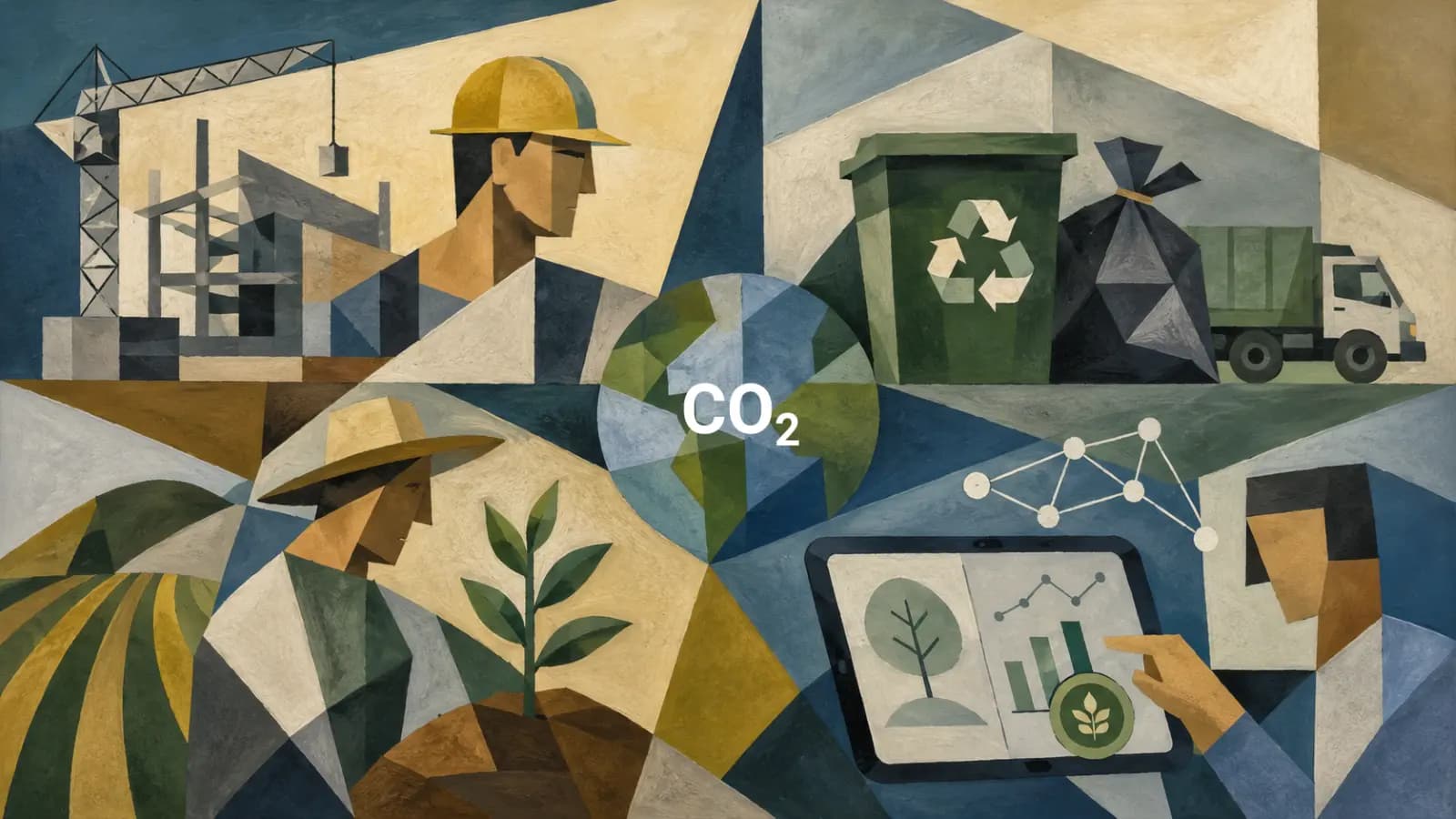
For decades, the global conversation around decarbonization has been shaped by images of wind farms, solar parks, electric vehicles, and more recently, futuristic technologies capable of extracting carbon directly from the atmosphere. While these innovations remain essential, they often overshadow a more fundamental question: What does decarbonization actually look like in South Asia?
In a region where agriculture sustains millions of livelihoods, cities are expanding at unprecedented rates, and waste generation continues to rise alongside economic growth, the journey to net zero is unlikely to mirror that of Europe or North America. South Asia’s transition will be shaped by its own realities – its farms, factories, construction sites, and communities.
An analysis of women-led climate enterprises participating in Project SAFFAL (South Asia Finance Facility for Acceleration and Leverage) identifies a set of emerging innovation patterns that together illustrate how decarbonization is taking shape across the region.
Some founders are embedding captured carbon directly into construction materials. Others are converting agricultural residues into biochar, restoring soil carbon through regenerative farming, capturing emissions from organic waste, or developing the digital infrastructure that enables carbon markets to function.
Viewed individually, these innovations solve local challenges. Viewed collectively, however, they point to something much bigger: South Asia’s decarbonization economy is not emerging from a single breakthrough technology, but from interconnected innovations across multiple sectors.
Decarbonization Begins with the Built Environment
The construction sector is among the world’s largest sources of greenhouse gas emissions, not only because of the energy buildings consume, but also because of the carbon embedded in the materials used to construct them.
According to UNEP‘s 2024 Global Status Report for Buildings and Construction, the sector accounted for around 32% of global energy consumption and contributed to 34% of global CO2 emissions in 2023, underscoring why reducing embodied and operational carbon has become central to climate action.
As South Asia continues to urbanize, demand for new housing, roads, and public infrastructure is growing rapidly.

Based in Ankleshwar, Gujarat, one founder is developing green building materials that inject captured carbon dioxide into fresh concrete, where it permanently mineralizes into stable compounds. In Visakhapatnam, Andhra Pradesh, another founder is advancing robotics-enabled 3D concrete printing systems that combine automation with sustainable materials to reduce construction waste and enable faster, more resource-efficient infrastructure. Meanwhile, a Chennai-based innovator is transforming road construction through bitumen pellet technology that eliminates the need for heated storage and transport, reducing energy consumption across the road construction value chain.
For years, sustainability efforts in the built environment focused largely on improving energy efficiency after construction. However, innovation is moving upstream now – toward redesigning the very materials from which buildings are made, allowing the built environment itself to become part of the climate solution rather than merely a source of emissions.
While buildings reduce embodied carbon, agriculture expands the opportunity by turning landscapes into long-term carbon sinks.
Agriculture is Emerging as a Carbon Sink
Agriculture is often discussed as a major contributor to greenhouse gas emissions.
According to the World Resources Institute (WRI), Agriculture, Forestry and Other Land Use (AFOLU) sector accounts for roughly 21% of global greenhouse gas emissions, while healthy soils and restored ecosystems also represent some of the world’s largest opportunities for long-term carbon sequestration.
Healthy soils naturally store carbon. Agricultural residues can be converted into biochar instead of being openly burned. Regenerative farming practices improve soil health while increasing long-term carbon sequestration.

In Guwahati, a climate enterprise is converting tea pruning waste into biochar, bioactive agricultural inputs, and clean energy through zero-emission cookstoves, turning an underutilized biomass stream into long-term carbon storage and improved soil health. A Gurgaon-based company is working across India, Nepal, Bangladesh & Kenya to develop smallholder carbon removal projects through afforestation, regenerative agriculture, biochar, and enhanced rock weathering, supported by digital monitoring systems. Meanwhile, in Sri Lanka’s Eastern Province, a women-led initiative is shaping a community-driven carbon blueprint model that combines technology, local knowledge, and youth leadership to measure emissions, strengthen climate action, and create green livelihood opportunities.
Rather than viewing agriculture solely through the lens of emissions reduction, these innovators are repositioning farms as active participants in carbon removal.
For South Asia, where farming underpins both livelihoods and food security, climate solutions cannot succeed unless they also strengthen rural economies. By combining environmental restoration with improved productivity and emerging carbon finance opportunities, these enterprises demonstrate how decarbonization and rural development can reinforce one another.
Instead of asking agriculture to produce less carbon, they are exploring how it can store more.
Beyond agriculture, another opportunity lies in rethinking waste streams.
Waste is Becoming Climate Infrastructure
UNEP estimates that waste sector contributes around 20% of human-caused methane emissions globally, making improved waste management one of the fastest opportunities to reduce short-lived climate pollutants.
Few sectors illustrate the principles of the circular economy better than waste management. Across South Asia, organic waste, agricultural residues, wastewater sludge, and industrial by-products are significant sources of methane when left unmanaged. An increasing number of innovators are treating these waste streams not as liabilities, but as valuable climate resources.
Based in Lucknow, Uttar Pradesh, a women-led company is upgrading biogas generated from food and agricultural waste while capturing carbon dioxide that would otherwise be released into the atmosphere, producing cleaner fuel alongside food-grade CO₂ for industrial use. In New Delhi, another enterprise is addressing one of North India’s most persistent seasonal pollution challenges by converting paddy straw into biofuel pellets instead of allowing it to be openly burned. Meanwhile, in Kerala, a women founder is leading her company to replace single-use plastic tableware with biodegradable products made from naturally fallen areca palm leaves, preventing waste before it is created while reducing dependence on fossil fuel-based materials.

Although the technologies differ, they are united by a common principle: carbon emissions are often symptoms of inefficient systems rather than unavoidable outcomes.
Every tonne of organic waste diverted from open decomposition, every crop residue reused instead of burned, and every industrial by-product returned to productive use represents emissions avoided before they ever enter the atmosphere.
Waste, in this context, becomes climate infrastructure.
Yet none of these physical innovations can scale without something less visible: credible carbon data.
Carbon Needs Digital Infrastructure Too
While many climate innovations are physical, another group of climate ventures is creating something far less visible, but equally essential.
In Bengaluru, a climate venture is developing a technology platform that supports the generation of high-integrity carbon credits through afforestation and ecosystem restoration projects. In Jaipur, Rajasthan, another enterprise is building a climate intelligence and carbon trading platform that helps manufacturers measure greenhouse gas emissions, connect with global carbon credit markets, and monetize verified sustainability actions.
As carbon markets mature and climate disclosure requirements expand globally, robust measurement, reporting, and verification (MRV) systems are becoming essential to ensure that emissions reductions are transparent, credible, and investable.
Carbon markets, climate finance, corporate net-zero commitments, and sustainability reporting all depend on reliable emissions data, making digital MRV platforms critical for measuring emissions consistently, verifying climate outcomes independently, and enabling trust needed for carbon credits and climate investments to scale.
In this evolving landscape, these digital platforms may prove just as important as the technologies that physically remove or avoid carbon emissions.

Although all these innovations appear to operate in entirely different sectors, they are all responding to the same reality: South Asia’s decarbonization challenge is deeply interconnected. Carbon is emitted when cities expand, when crops are cultivated, when waste decomposes, and when industries manufacture products. It follows that meaningful climate action must reshape each of these systems simultaneously rather than relying on a single technological breakthrough.
What These Innovation Patterns Reveal About South Asia
The strongest insight emerging from these enterprises is not the technologies themselves, but the way they connect. Together, they demonstrate that decarbonization is not a standalone industry; it is an integrated economic transformation spanning infrastructure, agriculture, waste systems, manufacturing, and climate intelligence.
Many of these enterprises also improve farmer incomes, strengthen local manufacturing, reduce pollution, create employment, conserve natural resources, and build more resilient communities. Carbon removal becomes one important outcome within a broader model of sustainable development rather than its only objective.
This systems-based approach may prove especially important for South Asia, where climate solutions must simultaneously address economic development, livelihoods, and environmental resilience.
Taken together, these innovation patterns point to an important shift in how decarbonization is unfolding in South Asia. Rather than relying on a single breakthrough technology, the region is enabling a distributed climate economy – one where carbon is stored in buildings and soils, avoided through circular waste systems, and measured through digital platforms.
It is this convergence of solutions, rather than any individual innovation, that may ultimately define South Asia’s path to net zero.
Why Decarbonization Matters for South Asia
South Asia is entering a defining decade. Cities will continue to expand. Infrastructure investments will accelerate. Agricultural systems will adapt to increasing climate stress. Waste volumes will rise alongside economic growth.
The choices made today will determine whether these transitions lock in future emissions or help reduce them.
The innovation patterns emerging from these women-led climate enterprises suggest that many of the region’s solutions will not come from importing technologies developed elsewhere. They are being shaped by founders who understand the realities of South Asian communities, industries, and ecosystems, and who are designing climate solutions accordingly.
The urgency is particularly acute in South Asia. According to the Intergovernmental Panel on Climate Change (IPCC) Sixth Assessment Report, the region is among the world’s most climate-vulnerable, facing escalating risks from extreme heat, water stress, floods, sea-level rise, and food insecurity. As these pressures intensify, climate adaptation and decarbonization cannot be pursued as separate agendas; they must evolve together through solutions that reduce emissions while strengthening livelihoods, infrastructure, and ecosystem resilience.
Although these innovations may appear modest when viewed individually, collectively they point to a more profound shift: the gradual emergence of a locally rooted decarbonization economy built around practical, scalable, and context-specific solutions.
“South Asia’s path to net zero will not be built through one breakthrough technology. It will emerge through hundreds of practical innovations that quietly reshape the systems people rely on every day.”
Mapping the Future of Climate Innovation
The significance of these enterprises extends far beyond the technologies they are developing today. Collectively, they offer an early glimpse into how South Asia’s decarbonization economy is beginning to take shape through mutually reinforcing innovations spanning infrastructure, agriculture, waste management, manufacturing, and digital climate services.
This is where Project SAFFAL’s role becomes particularly important. Beyond accelerating individual ventures, the programme provides a unique vantage point from which to observe emerging innovation trends across the region. When analysed together, these enterprises reveal where climate entrepreneurship is gaining momentum, where investment opportunities are emerging, and how practical, locally relevant solutions are responding to some of South Asia’s most pressing climate challenges.
Perhaps most importantly, many of these innovations are not emerging from large metropolitan technology hubs. They are being developed by women-led climate enterprises working at the grassroots – often from Tier 2 and Tier 3 cities and towns, and in close partnership with farming communities, local industries, and regional ecosystems. Their solutions are shaped by the realities of the places they serve, making them both highly contextual and inherently scalable.
The examples featured throughout this article represent only a small cross-section of the women-led climate enterprises that participated in Project SAFFAL and are building some exciting and promising climate solutions. Together, they demonstrate that some of South Asia’s most promising climate innovations are emerging not only from established innovation centres, but also from entrepreneurs building practical, high-impact solutions where climate challenges are experienced most directly.
South Asia’s path to decarbonization will not be built by one company alone, but by this growing ecosystem of innovators transforming the systems on which everyday life depends.
Join SAFFAL
The Climate Finance Catalyst for South Asia
Apply as an Impact Philanthropist, Donor, Startup, SME, Climate Expert, or Institution. Mobilize climate capital into the right sectors.